
Purchase points encourage customers to spend more and come back more often. Discover how a points-based loyalty program works.
At first glance, this may seem like a simple concept. A customer buys a product, receives a certain number of points, and later uses them for a discount, a reward, or a special benefit. But behind this simple model lies a much more serious business logic.
Purchase points are not just a small extra on the receipt. They can increase purchase frequency, raise the average basket value, and strengthen the likelihood that a customer will stay loyal to your brand.
That is the difference between a one-time sale and a lasting relationship. A single purchase brings revenue today. A purchase points program can influence the next purchase—and the one after that.
What are purchase points?
Purchase points are one of the key loyalty mechanisms, a reward model within a loyalty program. For every purchase, the customer earns a certain number of points, which can later be redeemed for discounts, gifts, special benefits, or progression to a higher loyalty tier.
The idea is simple: the more a customer buys, the more value they receive back through the system of rewards.
That is exactly why this model works so well. Customers immediately understand it. It requires very little explanation. It does not feel complicated. People quickly grasp the logic: buy, collect, redeem. And when something is clear and easy to follow, the chances that customers will actually use it become much higher.
How do purchase points work?
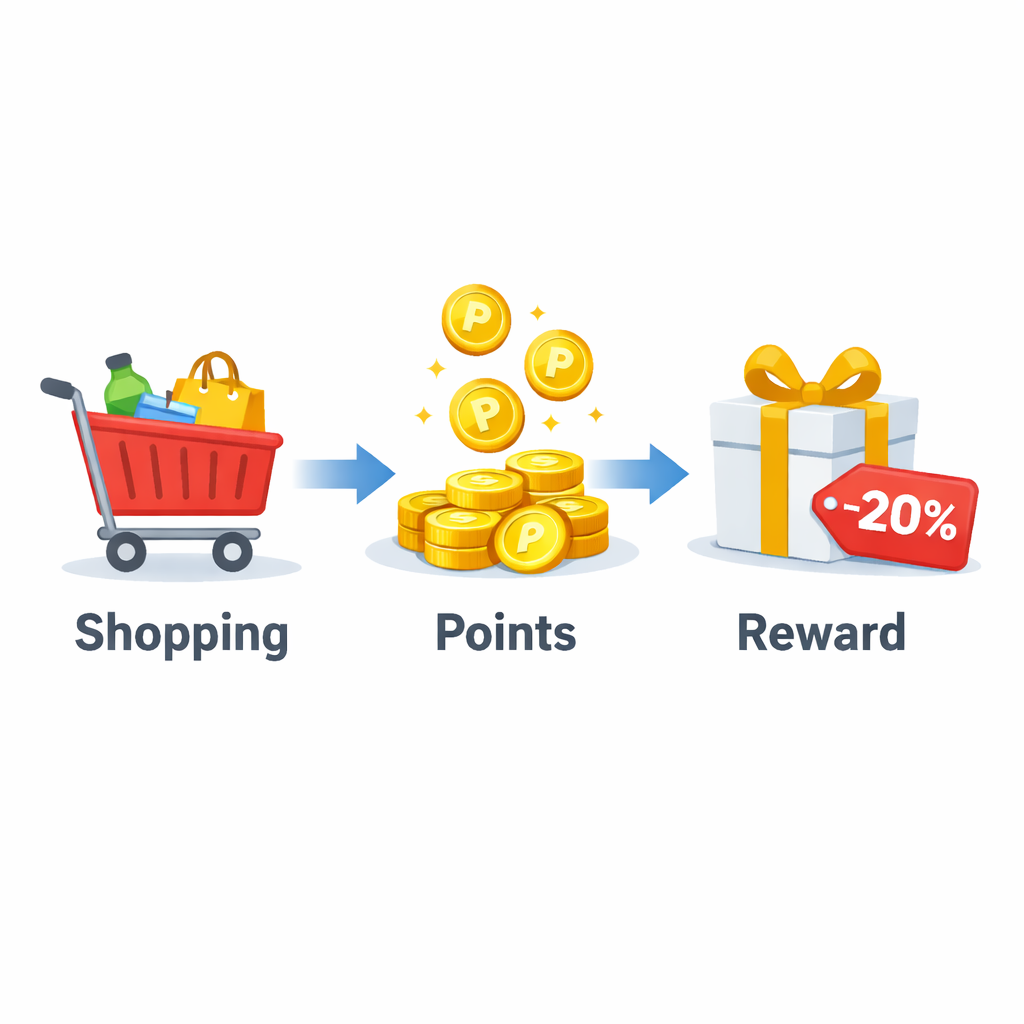
The most common principle looks like this: a customer makes a purchase, the system automatically assigns points, and the customer later redeems those points whenever they want to unlock a benefit.
In practice, the rules can vary. For example, a customer might receive 1 point for every 10 dollars spent. In some cases, customers can earn more points for certain product categories, purchases made during a specific period, or special promotional campaigns. More advanced models also reward additional activities such as referring a friend, registering an account, celebrating a birthday, or purchasing through a specific campaign.
But the core idea remains the same.
Every purchase is recorded, and the system shows the customer that their loyalty has real value.
And that is where the most important shift happens. The customer no longer sees only the amount they just spent. They also see the next reason to come back.
How do customers enter a purchase points system?
For a customer to start collecting purchase points, they first need to become part of a loyalty program. Entering the system should be quick and simple, without complicated forms or steps that might cause them to give up before they even begin. In practice, this usually means that the customer registers during a purchase, through a cashier in-store, via a website, or through a loyalty app. Once they are recorded in the system, every future purchase can earn them points, and the program begins tracking their activity and rewards.
Loyalty card as a classic and clear model
One of the most familiar ways to join the system is through a loyalty card. The customer receives a physical or digital card that they present during a purchase, allowing the system to recognize the user and automatically assign points.
The advantage of a card is that it is easy for customers to understand. They clearly see that they have an account within the program, that their purchases are being recorded, and that points are accumulating in one place. For that reason, a points card is often the first and simplest step in introducing customers to a loyalty program.
A mobile app as a more practical and modern solution
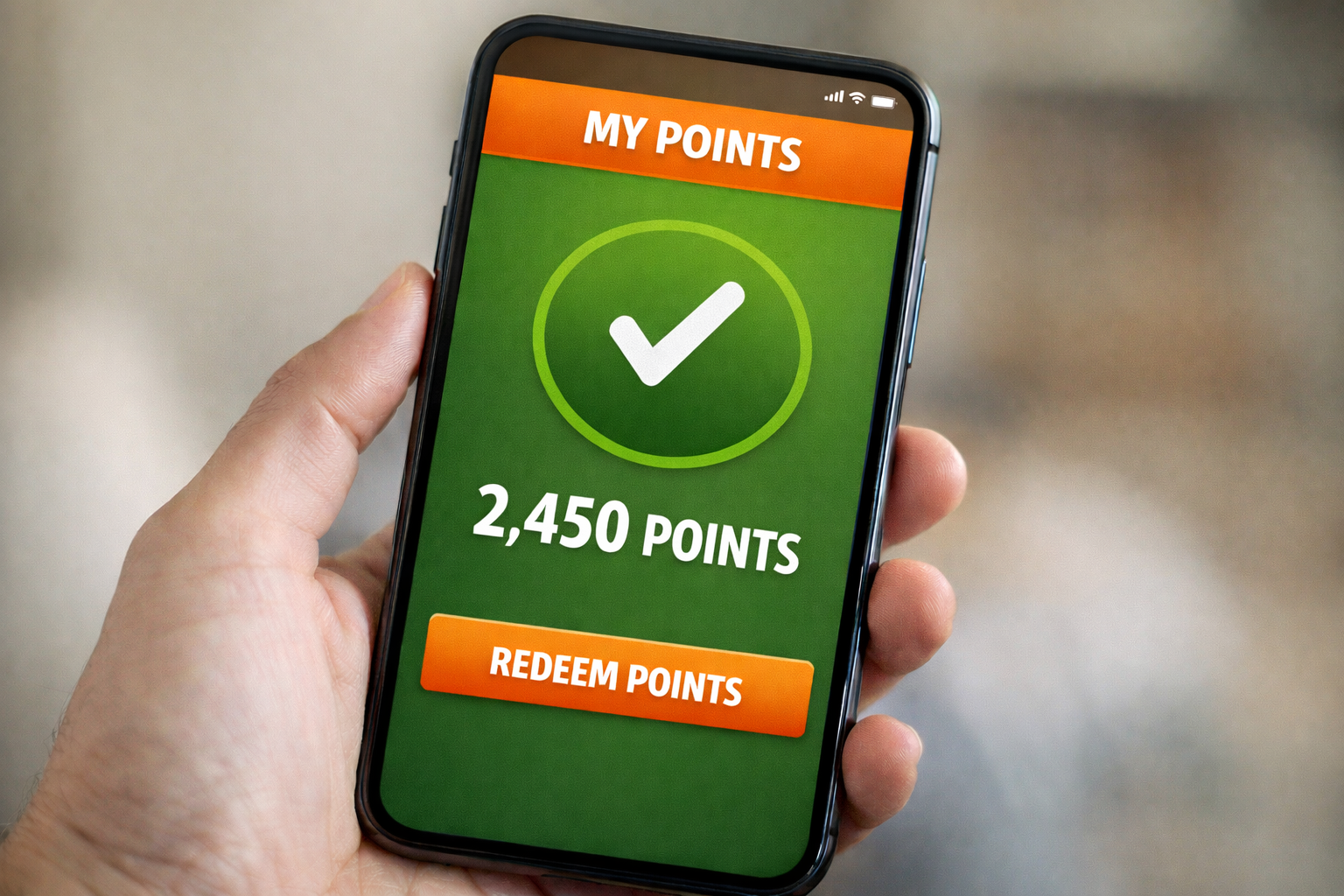
Another model is joining the system through a loyalty app, which for many businesses is becoming a more practical option than a traditional card. Through the app, customers can register, track their point balance, check available rewards, and receive push notifications when they can redeem a benefit.
This means the app is not only a tool for collecting points but also a channel for continuous communication with the customer.
While a card mainly serves to identify the loyalty program member, the app makes it easier to track points and makes the entire loyalty system more visible and useful in everyday shopping.
Card or app: which is better?
The best results often come from systems that offer customers both options. Some people find it easier to use a traditional card, while others prefer to have everything on their phone.
The key is not whether customers collect points through plastic or a screen. What matters is that joining the program is simple and that using it is completely clear. When customers can easily enter the system, know where to see their points, and understand how to redeem them, the chances are much higher that the loyalty program will truly become part of their shopping habits.
Why are purchase points so effective?
Because they do not influence only the immediate buying decision. They change the way a customer thinks about your brand.
When someone knows that every purchase brings additional value, the chances are higher that they will buy from you again next time.
When they see they are just a few points away from a reward, they will often add one more product to their basket.
When they know they will soon be able to redeem points, they are less likely to postpone the purchase.
In other words, purchase points introduce a sense of progress, and people like that feeling. They like seeing something accumulate. It feels different from “buy and forget.” Each transaction starts to feel like a step toward the next benefit.
Purchase points increase purchase frequency
One of the biggest reasons companies introduce this model is the need to bring customers back more often.
Without a loyalty mechanism, many customers behave quite simply. They buy when they need something. If they see a better price somewhere else, they go there. If nothing particularly ties them to your brand, they have little reason to stay loyal.
With purchase points, the situation changes. Customers know that every purchase counts. Suddenly it matters where they buy. If they are accumulating value that they can later use, your brand gains an advantage—even when competitors offer a similar product.
This does not mean points magically solve everything, but they can significantly shift customer behavior in your favor. Sometimes that small extra motivation is enough to keep a customer from choosing another store.
Purchase points increase the average basket value
This is another important effect that many businesses underestimate.
Customers often do not think only about what they need right now. They also think about how close they are to a reward. If they know they are just a few points away from reaching the next level, it becomes easy to add one more product to the basket. Not because they are forced to—but because it makes sense to them.
From a business perspective, this is a much healthier model than constantly lowering prices. Instead of cutting your margins again and again, you give customers a reason to spend slightly more and receive additional value in return. That way, you grow revenue without turning your entire sales strategy into a competition over who offers the biggest discount.
| Element | Without Purchase Points | With Purchase Points |
|---|---|---|
| Reason for returning | Customers return only when they need something | Customers have an extra reason to return and redeem points |
| Purchase frequency | Irregular and based on immediate needs | More frequent because each purchase brings value |
| Basket value | Customers buy only what they planned | Customers often add an extra item to reach rewards |
| Relationship with the brand | Brand is easily replaced due to price | Higher chance of long-term loyalty |
| Discount dependency | Business relies heavily on promotions | Loyalty program reduces dependence on constant discounts |
| Customer experience | Purchase ends with the receipt | Purchase becomes the beginning of the next benefit |
| Tracking results | Harder to measure loyalty | Easier to track who collects, redeems, and reacts to points |
Purchase points or instant discounts?
This is a common and very valid question.
An instant discount provides quick satisfaction. Customers see a lower price and make the decision easily. The problem is that this model trains customers to wait for promotions. If you constantly teach them to buy only when something is discounted, over time your brand becomes one where people rarely pay full price.
Purchase points work differently.
They do not solve only the current moment. They create a reason for the next visit. And that is far more important for long-term growth.
The best results often come when these two models are not seen as competitors, but as marketing tools with different purposes. A discount can trigger the immediate purchase. Points can ensure that the purchase is not the last one.
When are purchase points the right choice for your business?
This model works especially well for businesses where customers have a natural reason to return.
These can include retail chains, drugstores, pharmacies, pet shops, sporting goods stores, eCommerce sites, supermarkets, restaurants, cafés, and many other types of businesses where purchases are not one-time events.
If your customers buy occasionally—but not once every three years—purchase points can be a very good option.
They are also a strong choice when you want to introduce a loyalty system that feels natural and easy for customers to understand. Some loyalty mechanisms may sound clever in a meeting room but become confusing when they reach real customers. Purchase points have a clear advantage here. People understand them without much explanation.
How to set up purchase points so they actually work
This is where many businesses make mistakes.
It is not enough to simply say, “Starting today, we give points.” If the system is not carefully designed, customers will not understand it, will not use it, or will not find it interesting enough to influence their behavior.
- First, the rules must be clear. Customers should immediately understand how they earn points, what those points are worth, and how they can redeem them. If they have to read the fine print as if they are signing a loan agreement, you have already lost them.
- Second, the value must be visible. Customers need to feel that the points bring real benefits. If the points seem insignificant or too far from an achievable reward, motivation quickly drops.
- Third, the system needs to be connected to real business operations. It should not depend on manual tracking, improvisation, or messages like “we’ll wait for a colleague to check.” Purchase points should be part of a serious loyalty system connected to sales, customers, communication, and analytics.
- Fourth, you need to track the results. How many customers redeem points? How many return? How much does the average basket value increase? Which customer segments respond best? Without these answers, a loyalty program remains only a good idea without proof.
That is why purchase points should not become just another marketing concept that sounds good in meetings but disappears in practice. For the system to truly work, you need a solution that connects customer reward rules, customer data, communication, and real sales results in one place. Spotlight.
With purchase points, you can encourage the next purchase. You can reactivate customers who have not been active for a long time. You can reward your most loyal customers. You can increase the average order value. You can connect customers more strongly to your ecosystem and reduce the chances that they switch to a competitor because of a small price difference.
That is the moment when purchase points stop being a nice extra and become a serious business mechanism.
How does Spotlight help purchase points deliver real results?
This is where the difference between an idea and a system that truly works becomes clear.
Spotlight allows companies to introduce and manage a loyalty program that is not just attractive on paper, but fully functional in everyday sales. In practice, this means purchase points can become part of a broader strategy for customer retention, increasing purchase frequency, and driving revenue growth.
Instead of relying on manual tracking and improvisation, Spotlight helps you define clear point allocation rules, connect the program with your sales channels, automate communication with customers, and track results through real data.
This is especially important because loyalty programs today are no longer just about a card, a point balance, and the hope that customers will use it. Modern loyalty programs must be connected to analytics, customer segmentation, personalization, and real purchasing behavior.
Only then do purchase points start delivering a meaningful business impact.
What results can you expect from a well-designed system?
Setting realistic expectations is important.
You can expect:
-
more repeat purchases
-
a higher average basket value
-
greater engagement from existing customers
-
better response to campaigns
-
more data about customer behavior
And a much healthier approach to discounts, because you no longer need to rely on price reductions for every sales activation.
In other words, you gain a model that does not chase only the next sale, but builds a customer base that keeps coming back.
Are purchase points still relevant?
Absolutely.
They may sound like something that has existed for a long time, but that is exactly their advantage.
Customers already understand them. There is no need to teach them from scratch what collecting points means, how reward thresholds work, or how benefits are redeemed.
What has changed is not the principle itself, but the way it is managed. Today, purchase points deliver the best results when they are part of a modern loyalty system that understands who the customer is, how they shop, when they shop, and what motivates them.
One purchase brings revenue. A returning customer brings growth.
That is why purchase points are not just a benefit for customers, but a serious tool for businesses that want stronger loyalty, higher basket values, and less dependence on constant promotions.
The real question is not whether to give customers points, but how to structure them so they produce measurable results.
We have the answer.
Spotlight loyalty program.
Contact us and schedule a presentation.