Loyalty cards are more than plastic – they help you retain customers, track purchases, and build loyalty through a clear, structured system. This is a guide to their role and benefits.
Many businesses introduce loyalty cards with good intentions. What determines success isn’t the plastic in the customer’s wallet, but the system behind it – the one that actually influences a customer to come back.
If you’re in retail, hospitality, a service-based business, or operate across multiple locations, loyalty cards should be seen as an entry point into a system that remembers purchases, recognizes customers, assigns rewards based on clear rules, and gives you data for your next move.
Below, you’ll find a practical, operational guide: what loyalty cards are, how they work, what the loyalty card production process looks like, the most common mistakes, and when a card alone is no longer enough without a complete solution.
What are loyalty cards and what are they used for?
A loyalty card is a customer identifier within a loyalty program.
This means the card itself is not a benefit. It is a way for your system to recognize the customer at the moment of purchase, so you can assign rewards, record buying habits, and later communicate in a relevant way.
In B2B practice, it’s useful to distinguish three levels of loyalty cards.
Level one: the card as a discount.
The customer shows the card and receives the same discount every time. It sounds simple, but in the long run it often eats into margins and fails to distinguish between an occasional buyer and a valuable one. The business gains very little insight, apart from the fact that the card was used.
Level two: the card as value accumulation.
The customer collects points, stamps, or reaches spending thresholds. Here, you already have a mechanism that encourages repeat purchases. The customer has a reason to come back to reach the next reward level. The business can track purchase frequency, average basket value, and visit patterns.
Level three: the card as part of an optimized loyalty system.
At this level, the card connects the customer to a database, segments, and rules, while the program provides automation and reporting. This means the customer doesn’t just receive a reward, but a meaningful customer experience: one offer for new customers, a different one for regulars, and a special approach for those who have stopped coming.
This third level is what serious businesses use to stand out, because competitors can copy a card, but they can’t easily copy the system, the data, and the communication routine that brings customers back.
How loyalty cards work in practice: step by step
To understand how loyalty cards work, think of them as a number that activates rules. Everything else is the program logic and the way that number lives inside your sales process.
The first step is customer registration. It has to be fast and clear, because every extra step reduces the number of sign-ups. In practice, registration can happen at the checkout, via a QR code, through a web form, or inside an app. A good solution is one that works both when it’s busy and when there’s no time for explanations.
The second step is assigning an identifier. This can be a physical card or a digital card in a mobile app. The key isn’t the format, but reliability: the same customer must be recognized as the same customer every time, without duplicate accounts and without confusion.
The third step is linking purchases to the account. This is where the real value happens: the system remembers what was bought, when, how often, and for what amount. Without this, a loyalty program is just decoration. With this data, you can define reward rules that actually make sense for the business.
The fourth step is rule-based rewarding. Rules can be simple, like points for every amount spent, but they can also be smart: extra points for higher-margin categories, rewards for shopping during slower periods, or incentives to encourage customers to try a new category.
The fifth step is communication. When you know who is buying and how, you can send messages that aren’t generic. A relevant message doesn’t have to be complicated, but it does need a clear reason and purpose. Platforms that connect loyalty with online communication and a customer database have an advantage, because they allow the program to stay active and work every day, not just exist.
Types of loyalty cards and how to choose the right option
When a company decides it needs loyalty card production, it often thinks first about plastic. In reality, you’re choosing a method of identification and a way of using it — the design comes only after that.
Plastic loyalty cards make sense when you have a broad audience, when customers expect a physical card, when checkout operations need to be fast, and when you want the card to work without a phone. They are practical in environments where using a phone is slow, where customers don’t want additional apps, or where you work with a customer profile that more easily accepts a physical card.
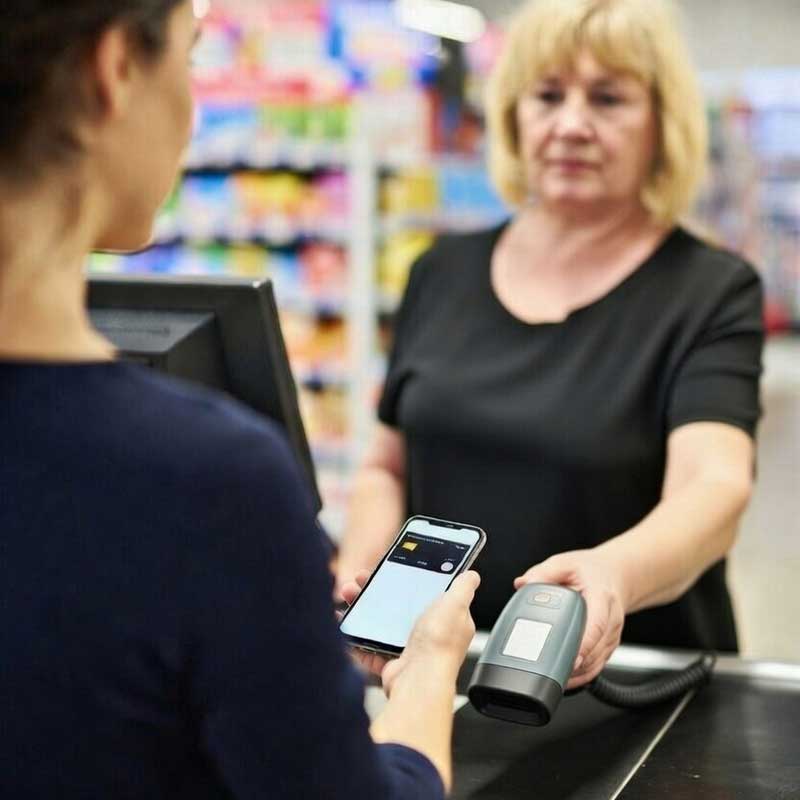
Digital loyalty cards on a phone are a great option when you want fast registration, lower costs, and easier program scaling. A digital card can be issued instantly, activated via a link or QR code, and can include additional features. This is especially valuable for businesses with multiple locations or with both online and offline sales, because a digital identifier travels more easily with the customer across different channels.
How to choose? Start with three questions.
How important is checkout speed to you?
If speed is critical, choose the option that scans the fastest and requires the least explanation.
How digitally ready are your customers?
If they’re used to doing everything on their phones, a digital card can be the dominant choice.
Do you operate across multiple locations and sales channels?
The more complex the system, the greater the need for unified identification and centrally managed data.
Loyalty card production and program rollout: from goals to checkout execution
The biggest mistake in loyalty card production is starting with design. Design is the final step. The real work begins much earlier — by defining the goal and the program rules.
- First, set a measurable goal.Examples of goals that make sense in B2B practice include increasing purchase frequency, increasing average basket value, reactivating dormant customers, or shifting customers toward higher-margin categories. Limit yourself to one or two core goals — too many goals lead to a program that’s confusing for both customers and staff.
- Choose the reward mechanics.Points are flexible, but they require customers to understand their value. Thresholds and tiers are great motivators because they create a sense of progress. Coupons work well for short-term campaigns and customer reactivation.
- Define the rules. How long do points last? Do they expire? Can rewards be combined? Are rewards the same across all locations? Who qualifies for VIP levels? When does the customer receive notifications? Without clear rules, a loyalty program quickly becomes a source of conflict at the checkout.
- Then card production come in. If you choose plastic cards, you’ll select the standard format, print type, personalization, and encoding method. Barcodes or QR codes are the most common because they’re simple and reliable. What matters is that the card is readable, scans quickly, and doesn’t look improvised.
The card is the physical proof that the program is serious.
- Introduce the program as a process, not an announcement: Train your team to explain it in one clear sentence. Implement an easy registration flow. Test it at a single location or during a limited period. Measure activations, usage frequency, and changes in customer behavior. Only once the process works should you scale it.
Platforms positioned as complete solutions — not just card suppliers — usually cover this exact part: rules, customer database, automation, and reporting, so the program doesn’t stay at the idea stage.
That’s why many companies look for solutions that combine professional loyalty card production with a loyalty program management system. With solutions like Spotlight, the card isn’t just a technical identifier — it’s part of the overall brand experience. From clear design and high-quality production to a backend system that tracks purchases, applies rules, and measures results.
A visually polished, recognizable card creates a sense of credibility at the checkout, while the software layer ensures the program runs consistently, is measurable, and can evolve over time. This connects what the customer sees with what the business needs: design that builds trust and a system that delivers data and control.
The benefits of loyalty cards that truly move the numbers and how they are measured
When loyalty cards are set up as a system, their benefits go beyond simply giving customers a reward.
The real advantage is that the company gains a mechanism for customer retention, promotion control, and smarter sales decisions.
Growth in repeat purchases
Loyalty in practice means that the customer has a reason to come back, instead of choosing the nearest or cheapest option. A well-designed program increases the likelihood that a customer will return again and again, until the behavior turns into a habit.
Growth in average basket value
Points and thresholds often motivate customers to add one more item in order to reach a benefit. This is simple purchasing psychology, but it only works when the benefit is clear and achievable.
Better control over promotion budgets
Instead of offering the same discount to everyone, you can provide incentives only to customers who are close to dropping off, or only to those who have the potential to move into a higher spending level. This saves marketing budget and often delivers a stronger impact.
A customer database that becomes a business asset
In a world where channels change, algorithms evolve, and advertising costs keep rising, a customer database is something you truly own.
That’s why there is increasing focus on systems that integrate loyalty, customer databases, and automation — because they provide stability and long-term advantage.
Learning from data
Through a loyalty program, you can identify patterns: how long the purchase cycle lasts, when customers typically stop coming, which categories are bought together, and which time periods are weak. These are insights competitors can’t guess by intuition — they can only come from a system.
Marketing literature generally finds that loyalty programs can increase purchasing behavior over time, but the effect depends on program design and customer segments. That’s why a program should not be the same for everyone, but needs to adapt through segmentation and rules.
The most common mistakes that prevent loyalty cards from delivering results
Most companies don’t fail because the idea is bad, but because they treat the program as a one-time campaign instead of a system that is managed and developed over time.
These mistakes occur so often that it’s useful to go through them one by one, because each of them quietly kills the program without dramatic warning signs.
- No clear benefit, or a benefit that’s too far away.
If customers don’t understand what they get and when, the card ends up in their wallet as just another piece of plastic.
The benefit must be clear, achievable, and tied to habit. A good program always has at least one quick reason for customers to feel that joining is worthwhile, plus a long-term reason to stay active. - Complicated registration.
If joining takes more than a few seconds at the checkout, staff will stop offering it and customers will drop off. The solution is a short registration that can be completed later if needed. The program has to work during busy periods — because busy is reality. - Everything turns into a discount.
Discounts attract bargain hunters, but they don’t build relationships. Constant price cuts train customers to wait for the next discount. It’s much healthier to use rewards, thresholds, tiers, and special perks, because they protect brand value. - No analytics or optimization.
If you don’t measure activations, usage, visit frequency, and reactivation of dormant customers, you don’t know whether the program works. Without measurement and customer analysis, the program becomes a habit, not a tool. In practice, companies with systems that integrate customer databases and automation can track results more easily and adjust rules when needed. - Poor communication.
If customers receive generic messages or get them too often, the program becomes annoying. If messages don’t arrive at all, the program is forgotten. That’s why communication needs to be relevant and tied to customer behavior.
When loyalty cards aren’t enough – and why a complete solution makes the difference
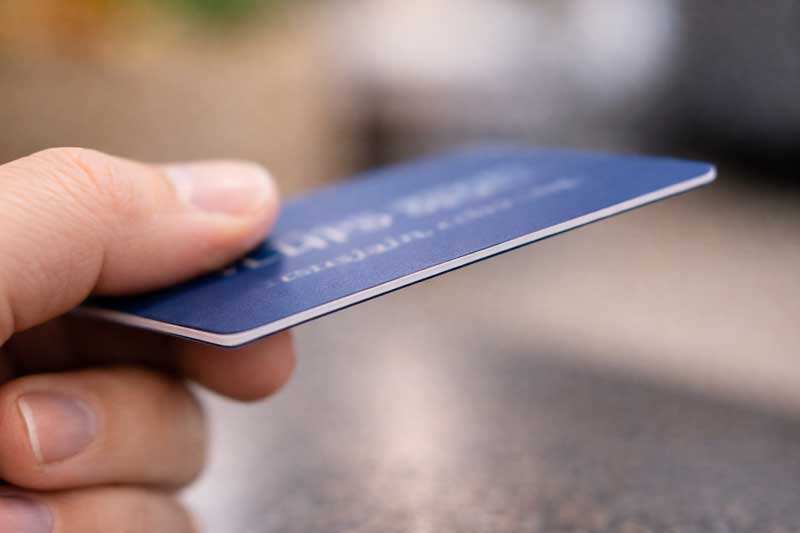
If you have a small number of customers and a single location, a simple solution can sometimes be enough. But as soon as a business becomes more serious, the card as an object stops being the central topic.
The central topic becomes the system behind the card.
Cards are not enough when you operate across multiple locations. In that case, you need centralized rule management, a unified customer database, and a consistent experience. Without that, one location offers one thing, another offers something else, and customer trust erodes.
When you want to bring back dormant customers, that isn’t solved by a card, but by detecting that a customer hasn’t visited for a certain period and activating the right message or offer. That’s automation, not printing.
Cards are not enough when you don’t want to spend your budget on everyone. If you want to reward only those with potential to spend more, or offer a reason to return only to those who are close to leaving, you need segmentation. Segmentation requires data and a system that can use it.
Many programs look like they’re working because cards are being distributed, but without reports you don’t know whether behavior has actually changed.
A complete solution means having full visibility into your customer base, campaigns, and results — and being able to adjust rules when you see where things are leaking.
In that sense, Spotlight positions itself not just as loyalty card production, but as a complete system for loyalty programs, customer databases, and communication automation, applicable both online and in physical retail locations.
Frequently asked questions about loyalty cards
Loyalty cards raise similar questions for most companies, and it’s important for the answers to be clear — because they support both SEO and sales, and reduce uncertainty in B2B decision-making.
How much does loyalty card production cost?
The cost depends on the type of card, quantity, personalization, and identification technology. However, the most expensive option is paying for cards without paying for the process. Cards without a system and measurement usually end up as a cost without return, because there are no rules, no communication, and no optimization.
Do loyalty cards work for small businesses?
They do, but only if the program is simple. A small business can’t sustain a complex program, because there’s no time for explanations or manual management. That’s why fast registration, clear rules, and an achievable reward are essential. When the program becomes part of the routine, small businesses often feel the impact faster than large ones, because every returning customer immediately affects revenue.
Which is better: plastic or digital cards?
In practice, the best answer is to choose the format based on your customers and the checkout process. Plastic creates habit and speed, while digital enables faster onboarding and easier control. Many businesses use a combination, because different customers prefer different habits.
Does a loyalty card have to be a discount?
No — and it’s often better if it isn’t a permanent discount. Points, tiers, special perks, priority offers, and personalization often deliver stronger results with less pressure on margins.
Loyalty cards are the starting point — the system is what creates the advantage!
When you set up a loyalty program as a system, you gain purchasing habits, a customer database, and the ability to grow without constantly chasing new customers.
If your goal is a loyalty program that’s stable, measurable, and scalable, the natural next step is a complete solution like Spotlight, where the card isn’t a product on its own, but part of a broader system that connects loyalty, customer data, and communication automation.