Push notifications can significantly increase conversions. Learn how they work, what advantages they offer, why brands are adopting them more often, and how you can implement them as well.
Push notifications are one of the most direct communication channels a brand can use — a short message that appears on the user’s screen even when they are not actively using your website or app. While they may appear simple, their impact is far greater: push allows you to reach the customer at the exact moment they need information most, without relying on algorithms, inbox filters, or assumptions.
For many companies, this is still a relatively new topic. They know push notifications exist, but they are not entirely sure what exactly they do, how to use them, or how they compare to other channels.
In practice, push notifications solve one of the biggest problems in modern marketing — lack of attention.
Customers jump from app to app, from site to site, while brands fight for just a few seconds of visibility.
A push message cuts through all barriers and appears right where the user is already looking: on their device’s screen.
Thanks to that, push notifications play a unique role in the customer journey. They can bring back users who abandoned the process, remind them of a benefit, inform them about an important update, or encourage them to complete a purchase.
In loyalty programs, push becomes even more valuable — it enables timely updates about points, benefits, and personalized offers.
What makes push notifications especially practical is their straightforward implementation.
In this article, we will cover how push notifications work, why brands increasingly rely on them, and how to integrate them into your existing loyalty and marketing automation strategy.
What Are Push Notifications?
Push notifications are short messages that appear on the user’s screen — on a phone or computer — even when they are not actively using your website or app. In practice, this is the most direct digital communication channel a brand can use, regardless of where the user is at that moment.
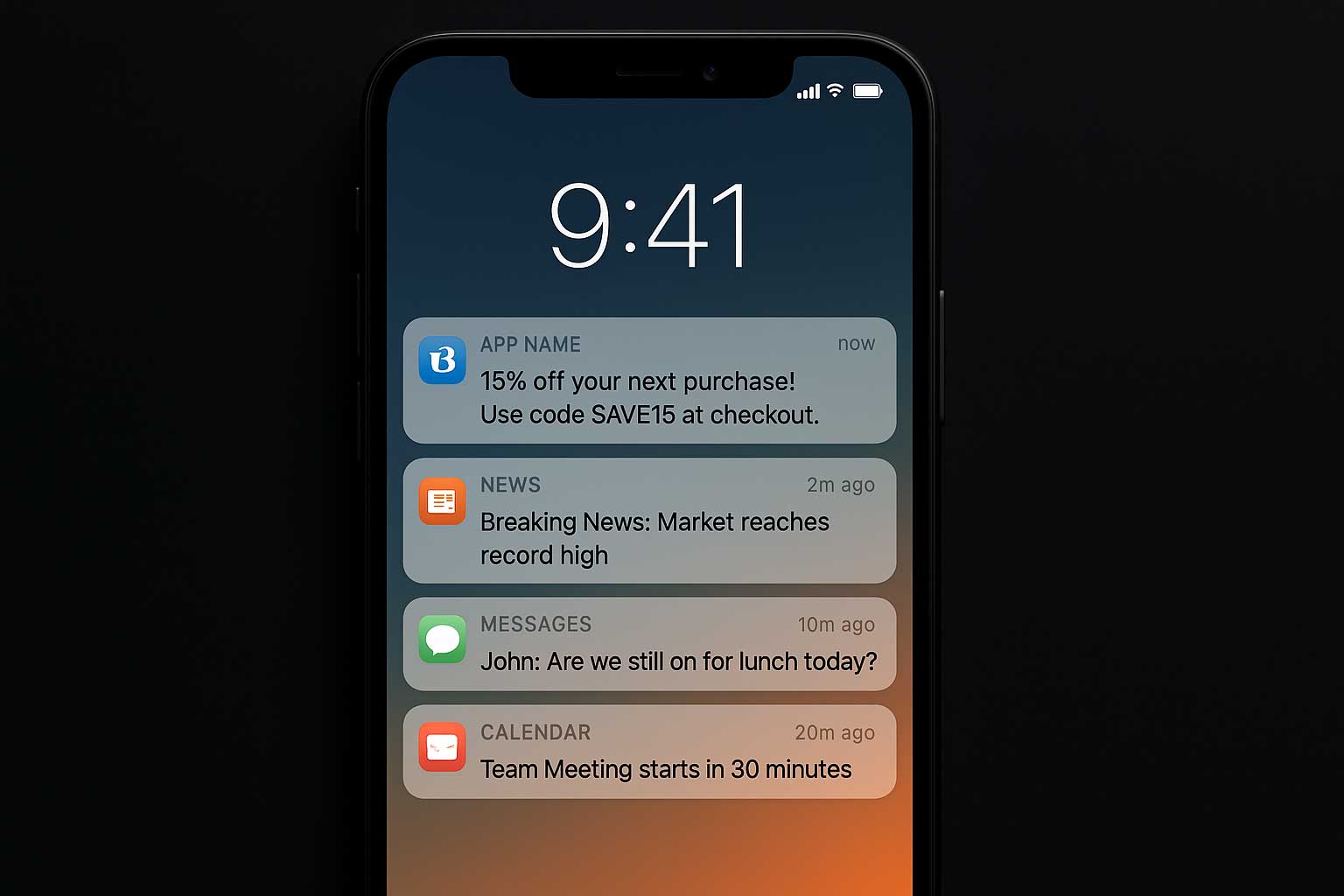
Unlike email, which may remain unopened for hours, or social media posts that algorithms can hide completely, push notifications appear instantly and in a place users regularly check: their mobile phone, tablet, or computer screen.
This makes them particularly effective for time-sensitive situations — flash offers, time-limited reminders, order status updates, abandoned carts, or loyalty-related alerts.
Push messages are short, clear, and practical. Their goal is not to convey a lot of information but to trigger one specific action: view the offer, open an email with details, activate a coupon, return to the website, or complete a purchase. This simplicity — high signal, low noise — makes them a powerful addition to any loyalty and repeat-purchase strategy.
In other words, push notifications are not just a technical add-on. They are a channel that allows the brand to be present at the exact moment the customer is making a decision. In a fast-moving environment, that creates an advantage.
Why Push Notifications Are an Important Tool in Loyalty Marketing
In loyalty strategy, timing and relevance are essential. Push notifications enable exactly that — instant delivery of information that affects user behavior. The effects are very concrete: higher engagement, more frequent purchases, and improved results in every communication cycle.
The first major advantage of push is speed.
When a brand has a time-sensitive offer or needs to announce a new loyalty benefit, email often arrives too late. Push appears instantly and has significantly higher visibility. For customers who make decisions on the move — on the way to work, in a store, between meetings — this is crucial.
The second advantage is independence from user activity.
Push works even when the user is not actively on your website or app. The brand no longer depends on whether the user “stops by.” Abandoned cart, expiring points, new loyalty tier, personalized offer — everything reaches the customer at the right moment.
The third advantage is relevance.
Push notifications are not sent to everyone — they are always targeted and segmented.
- A lapsed customer gets a different message from a frequent buyer.
- A VIP member gets early access.
- A new user gets an explanation of program benefits.
This avoids communication overload and ensures each message has a specific role.
Push notifications also have an operational advantage: they are quick to produce.
Short text, clear CTA, minimal design. When fast action is needed, push is the most agile channel.
Overall, push notifications can directly influence engagement, repeat purchases, and program activity frequency. In systems that require ongoing communication, push provides a stable, predictable channel that delivers messages exactly when needed.
Introduce Push Notifications Into Your Marketing — With Spotlight
Spotlight uses push notifications as part of its loyalty app.
When the app is installed, a message appears on the user’s screen regardless of whether they are currently using it. This ensures immediate visibility and eliminates dependence on the user opening the app or visiting the website.
This is especially effective in situations where timing is crucial — short-term promotions, personalized benefits, point updates, order statuses, or important changes that shouldn’t go unnoticed.
Push notifications in Spotlight are also interactive. Users can take immediate action directly from the notification — open a coupon, activate a code, start a purchase, leave a rating, or jump to a specific screen in the app. This shortens the path from message to action and greatly increases conversion.
Push messages can also include personalized offers — vouchers, codes, and exclusive benefits. Brands use them as an additional layer of motivation inside the loyalty program, delivering real-time value and strengthening loyalty.
Spotlight makes this simple and easy to manage. Brands can create personalized push campaigns, set automation rules, target specific user segments, and track results. With this, push notifications become a strategic channel within the loyalty system.
The loyalty app also enables double engagement — the user opens the push and immediately lands in the interface where they see points, benefits, recommended products, or personalized content. This increases motivation and supports immediate action.
For the brand, this means a stable communication channel that does not depend on social media algorithms, SMS costs, or crowded email inboxes. Push notifications through the loyalty app land quickly, precisely, and directly in front of the intended user — which is why they are a key part of modern loyalty systems and marketing automation.
How to Use Push Notifications Correctly — Best Practices
For push notifications to truly deliver results, they must be used carefully, strategically, and in tune with actual customer behavior. Otherwise, they can become a source of irritation rather than a useful signal.
Best practice relies on four pillars:
- The right timing
Push only works when the user can act on it. This varies by industry, customer habits, and loyalty program specifics.
- Clear, short message
A push must answer: “What does the user get, and what should they do?”
If they need to read it twice, the opportunity is lost.
- User segmentation
If everyone receives the same message, it loses relevance. Segmentation ensures the user receives something that matches their behavior.
- Sending frequency
Push is not an everyday channel. Overuse leads to opt-outs. Each message must have a justified purpose.
- Tracking and optimization
Clicks, returns to the app, completed purchases — everything is visible in real time. This enables constant improvement and performance growth.
When used properly, push notifications become a structured, controlled, and highly effective communication tool that can drive a significant portion of sales impact.
Implementing Push Notifications — Step by Step
Spotlight integrates push notifications into automated, orchestrated communication inside the loyalty program. This means push is no longer a standalone channel but part of a broader strategy that includes email, SMS, Viber, and other formats.
Example Scenario: Driver John — Fuel Station Loyalty Program
John is a regular customer who usually refuels every two weeks. He uses points for free car washes and coffee. But now 30+ days have passed — John hasn’t visited.
The brand wants to bring him back — not with a large discount, but with a smart, timely push notification.
- Define the communication goal
Goal: bring back regular drivers who haven’t returned in 30+ days.
- Segmentation in Spotlight
John is automatically placed in the segment:
- regular customer
- last refuel 34 days ago
- 1200 points
- app user
- frequently redeems coffee voucher
A special push campaign is created for this segment.
- Trigger: 30 days without visit + expiring points
Push is sent automatically when John meets the criteria.
Best time: morning (7–9 AM).
Push message:
“ John, you have 1200 points expiring in 5 days. Redeem them for a free coffee with your next refill.”
CTA: “Show my points”
- Create a concise message — benefit first
Simple, direct, habit-based messaging works best.
- Tracking and optimization
Spotlight customer analytics shows:
- John opened the push 2 minutes after receiving it
- opened the app
- activated the coffee voucher
- visited the station the same day
- purchased fuel (100 $)
This confirms:
- push works when timed right
- it’s relevant
- it’s simple
- and it brings back customers without unnecessary discounts
The Most Common Push Notification Mistakes and How to Avoid Them
Although push notifications are easy to send, the most common mistakes happen due to planning oversights. Two seconds of the wrong message are enough for a user to turn off notifications — which is why it’s crucial to approach them carefully.

- Sending mass messages
Destroys relevance and reduces engagement. - Too frequent communication
Users quickly disable notifications. - Poor timing
If the user cannot react, the opportunity is wasted. - Unclear message
If the value is not obvious within seconds, the push fails.
Push notifications become the fastest route to the customer at the exact moment of decision — while the intention is still fresh.
But their true strength appears when they work together with other channels.
Spotlight connects push, Viber, SMS, and email into a unified system that does not rely on luck, but on a coordinated flow that moves customers from notification → to action → to purchase.
When push becomes part of this structure, it accelerates reactions, increases engagement, and makes the loyalty program more visible, dynamic, and effective.
Brands that understand this rely on strategy — not chance. And that is where Spotlight makes the difference.