Discover the best marketing tools to elevate your business. Scale your sales, automate communication, and build loyalty — all from a single system.
In today’s business landscape, data exists — but it’s rarely used consistently. Customer communication happens across multiple channels, often without real coordination. At the same time, customer expectations are rising, and acquisition costs have never been higher.
Marketing tools are no longer just a trend — they’re essential for operational efficiency.
In this article, we focus on specific marketing tools that enable structured customer relationship management, automated communication, and systematic loyalty building — all through an analytical, performance-driven approach.
Marketing today isn’t just about budget or creativity — it’s about how effectively you use the tools already at your disposal. There’s no room for guesswork anymore: if you don’t know exactly who you’re talking to, what you’ve communicated before, and how people responded — every next step is a shot in the dark. That’s why marketing tools have become indispensable, not only for large systems but also for small businesses looking to grow smart. From loyalty to automation, from emails to Viber messages — today, there’s a tool for every step of the customer journey.
Find out what you really need, how to choose, connect, and use marketing tools that save you time, deliver results, and build customer loyalty that last far beyond a single purchase.
What falls under “marketing tools” today? Types of marketing tools and their applications
Modern marketing relies on a range of tools that together form a system for attracting, retaining, and engaging customers.
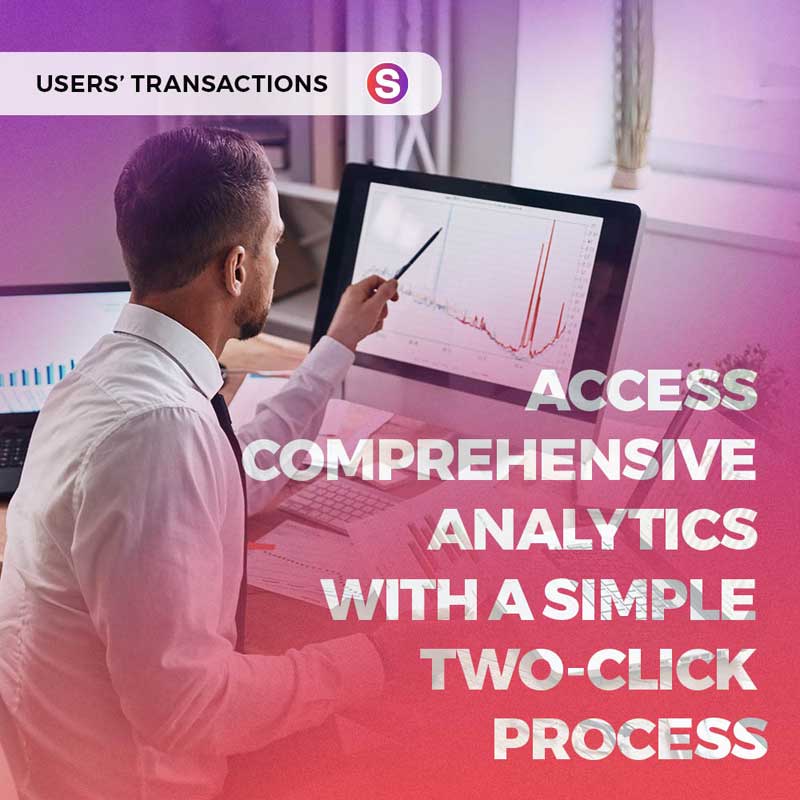
Overview of essential marketing tool types and their role in business growth
1. Tools for market and audience research
These tools help you understand what your potential customers are searching for, how they behave online, and what their needs and pain points are. They enable analysis of trends, seasonality, user queries, and hot topics — laying the foundation for a relevant strategy without guesswork.
2. SEO tools (Search Engine Optimization)
SEO tools assist with keyword research, competitor analysis, technical website audits, and strategy development for better Google ranking. They help ensure your offer doesn’t go unnoticed, but instead appears right in front of those searching for it. These tools increase your organic traffic — without paid ads.
3. Content creation and optimization tools
There’s no trust without quality content. These tools support the creation of written, visual, video, presentation, and social media content. They also help check tone, clarity, length, and SEO alignment. Great content informs and persuades — without selling aggressively.
4. Email marketing and automation tools
Email isn’t outdated — when used smartly, it still offers one of the best ROI rates. These tools enable personalized campaigns, behavior-based automation (e.g. cart abandonment), audience segmentation, and performance tracking — with minimal manual work.
5. Social media management tools
These tools are for planning, scheduling, and analyzing posts on platforms like Instagram, Facebook, and LinkedIn. They help monitor engagement, analyze what types of content work best, and maintain a consistent brand identity and emotional connection. They also streamline comment management and follower communication.
6. CRM Tools (Customer relationship management)
CRM systems provide a detailed view of customer behavior — what they viewed, what they purchased, when they were last active. They’re used for managing contacts, sales opportunities, and communication. These tools are essential for building long-term relationships and personalized experiences.
7. Advertising and performance analytics tools
These tools help you create, optimize, and track the success of ad campaigns — on search engines, social media, or other platforms. They allow A/B testing, conversion tracking, and precise targeting. Without them, ad budgets often get spent with little return.
Today, a “marketing tool” is more than just a post scheduler or email sender. It’s an entire ecosystem of interconnected solutions — from platforms that analyze customer behavior to systems that automate messages, reminders, and rewards.
At their core, marketing tools do three things:
-
Attract attention (ads, SEO, social media)
-
Engage users (email & Viber campaigns, content, personalized messages)
-
Retain customers (loyalty programs, automation, behavioral data)
But the real power isn’t in what a tool can do — it’s in what you can do with it.
A good tool lets you:
-
Track every customer as a person, not a spreadsheet number
-
Automatically send meaningful messages (e.g., a product reminder 30 days after purchase)
-
Create relevant offers based on data — not intuition
This means the right tools save you time, support decision-making, and increase the chances your customer will return — because you’re building a relationship and brand loyalty.
And it’s not about using more tools — it’s about using the right ones, integrated into a system that works as a whole. That’s how marketing stops being a series of disjointed actions — and starts functioning as a real strategy.
Spotlight is exactly that kind of tool – a unified platform that lets you track customer behavior, send messages, deepen customer relationships — and boost sales.
Book a demo and we’ll show you how it works.
Loyalty programs as marketing tools — the silent drivers of sales
Retaining a customer is often ten times more profitable than acquiring a new one. Not just because acquisition is expensive (which it is), but because a returning customer tends to spend more, purchase more often, and respond more easily to offers they’ve seen before.
That’s why loyalty programs shouldn’t be seen as mere “rewards for loyalty” — they are powerful tools for deepening relationships. When set up correctly, they don’t just encourage repeat purchases and improve sales, but also provide the most valuable asset in modern marketing: insight into loyal customer behavior.
This is exactly where tools like Spotlight come in, allowing you to create a fully digital loyalty system — no paper cards, manual tracking, or physical stamps. Everything is automated:
The customer shares their info → makes a purchase → the system recognizes the behavior → automatically awards points or triggers a special offer.
On your end, you gain visibility into their purchase history, reactions to promotions, and the perfect timing to re-engage.
What used to require a CRM system, loyalty software, and a dedicated team — can now be managed on a single platform.
And most importantly: the customer feels seen. And today, that’s a luxury they won’t forget.
Gift Cards as marketing tools — more than just a present
Most businesses think of gift cards as an optional add-on. In reality, when used smartly, they’re one of the most powerful tools for organic growth.
Unlike a short-lived discount, a gift card carries emotional value, sales potential, and word-of-mouth power — all in one. When someone gives one, they’re not just gifting money — they’re gifting trust. And a gateway to your brand.
That’s why a gift card isn’t just a convenient present. It’s a strategic tool that:
-
Attracts new customers with zero acquisition cost
-
Encourages existing customers to share your brand by treating others
-
Increases average order value, since customers often add more than the card’s value
Spotlight makes this kind of flexibility easy. You can track usage, see who activates the cards, and — most importantly — see how it brings customers back.
Email marketing — old-school channel, smarter execution
In the age of social media and instant messaging, it’s easy to underestimate email. Yet the data tells another story: email marketing still delivers the highest ROI of all digital channels.
Why? Directness.
Email doesn’t depend on algorithms, doesn’t get buried in feeds, and doesn’t need an ad budget for every message. When you know who you’re writing to, when, and what — the results follow.
But… that’s a big “if.”
Modern email tools need to do far more than send newsletters. They need to handle:
-
Segmentation – because not everyone should receive the same message
-
Automation – because messages must be sent at the right moment, without manual effort
-
A/B Testing – because sometimes the difference between success and failure is one sentence
When combined with user behavior data, email becomes an extension of the customer experience, not just a sales tool.
That’s why Spotlight integrates email marketing into its system to make it reactive and personalized.
-
A customer abandons their cart? The system sends a reminder.
-
Bought the same item two months in a row? They get a personalized offer next time.
-
Birthday coming up? A message — and maybe even a gift — is on the way.
All without adding work for your team — and with extra brand points from your customer.
Email is no longer about mass messaging. It’s now precise, automated, and personal. And when done right — it still delivers the best results.
SMS and Viber messaging – A marketing tool without algorithms or extra clicks
Not every customer checks their email every day. Not everyone reads newsletters.
But almost everyone reads the messages that land directly on their phone.
That’s why SMS and Viber remain among the most effective channels for urgent, clear, and concise communication.
-
Open rate? Over 90%.
-
Response time? Just a few minutes on average.
What makes them powerful marketing tools isn’t just their directness, but the ability to use them at key moments in the customer journey:
-
Reminders about expiring discounts
-
Exclusive offers for loyal customers
-
Personalized weekend coupons
-
Notifications about gift cards or new product launches
SMS delivers sharp, to-the-point messages. Viber adds visual value — an image, a button, a link. Combined, they give you a tool that can prompt user action within seconds.
And with real-time tracking of opens, clicks, and responses, you always know what’s working.
In a sea of messages that go unread, SMS and Viber remain what marketing needs most: a reliable channel that truly reaches the user — exactly when it matters.
Marketing automation – Let the system work for you
Marketing no longer needs to rely on sticky notes, manual reminders, or endless browser tabs.
Today, every user action — or inaction — can automatically trigger the next logical step.
That’s the essence of marketing automation: The system monitors user behavior and reacts at the right time — with a message, an offer, or a reminder.
All without an extra click from you.
For example:
-
A visitor views a product but doesn’t buy → Viber message is sent with an added incentive
-
A customer hasn’t returned in 30 days → An email with an exclusive return code is triggered
-
A user signs up for the first time → A welcome sequence introduces them to your brand
This doesn’t just save time. It also:
-
Reduces errors by removing dependence on human memory
-
Boosts relevance by aligning messages with user behavior
-
Frees up your team to focus on strategy instead of repetitive tasks
Automation isn’t a luxury — it’s the only way your marketing can run constantly, precisely, and at scale.
And most importantly, your customer always feels like they got the right message at the right moment.
Customer data platform – The silent core that connects everything
If each marketing tool runs on its own, you work for them.
But if they’re connected — they work for you.
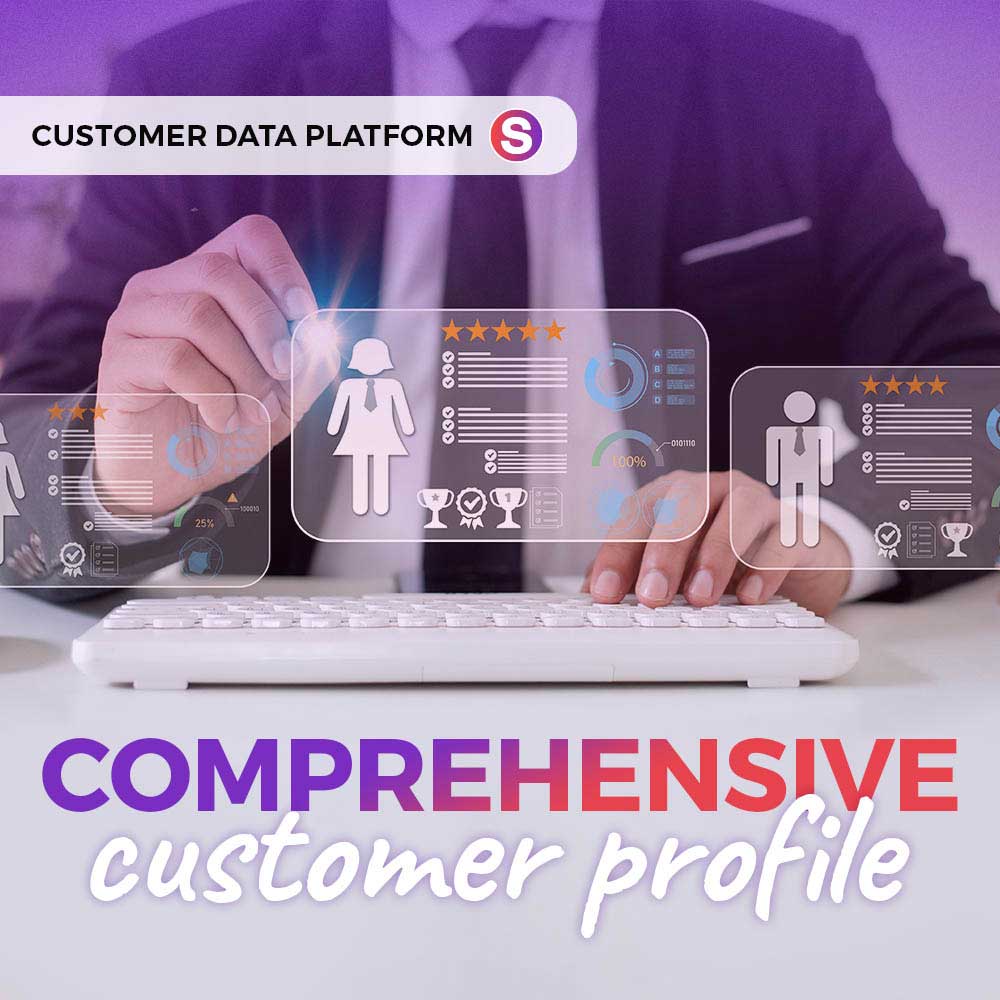
That’s where a customer data platform (CDP) comes in.
A Customer Data Platform (CDP) is a system that collects, organizes, and connects customer data across all channels — emails, Viber messages, purchases, website visits, gift cards, loyalty programs — and turns it into a single, unified customer profile.
In other words, a CDP eliminates the guesswork — you don’t assume who your customer is. You know.
Specifically, a CDP helps you answer questions like:
-
Who are your most loyal customers and how do they shop?
-
When do people return — and when do they leave?
-
Which messages and channels truly drive action — and for whom?
And when you know that, you can:
-
Send the right messages at the right time
-
Create precise customer segments (e.g., “active buyers who haven’t engaged in 30 days”)
-
Measure campaign success not just through clicks, but through actual purchase behavior
In the Spotlight platform, the CDP is built into the core of the system. That means every piece of user data — from their last purchase to their campaign response — is automatically unified in one place. You don’t have to chase data across different tools.
All your tools (email, SMS, loyalty, automation) communicate with the same view of the customer.
That’s why a CDP isn’t just another tool.
It’s where all your marketing efforts finally come together as a strategy.
How to choose marketing tools that actually work for You
The digital world is overflowing with tools promising growth, automation, loyalty, savings — all at once. But the reality of most businesses is this: limited budgets, small teams, and not enough time to test everything.
So choosing the right marketing tools shouldn’t start with “What can this tool do?” but rather:
“What exactly do I need to fix or improve right now?”
Ask yourself a few key questions:
-
How many people will realistically use the tool?
-
Where is your sales process leaking — first contact, conversion, retention?
-
Do you have data you’re not using — or no data at all?
Don’t get distracted by the range of features.
Focus on the depth of what you actually need.
And remember: One tool that gets used is better than five that just sit there waiting for someone to “get around to it.”
The best marketing tool is the one that’s used. Everything else is just decoration.
Marketing tools should work for you — Not the other way around
There’s no one-size-fits-all marketing solution — but one thing is common to every successful system: tools that are functional, connected, and adapted to your needs — not the other way around.
Today, a small team with a strong system can achieve what used to require big agency budgets: personalized communication, precise targeting, and loyalty that isn’t left to chance.
If you’re at the stage where you care more about what works than what’s “trendy,”
it’s time to explore platforms that connect every critical point of marketing into one flow — from data to message, from action to results.
Spotlight is one of those platforms.
One system. One customer view. More results.
Don’t choose a tool for its features.
Choose the one that frees you to focus on the business — not the systems