
How to improve the customer experience when the problem isn’t the service? Discover how a systematic approach and deeper insight into customer behavior change the outcome.
Customer experience is one of those topics everyone talks about, but few truly address in the right way. Most companies still try to improve it through isolated actions: better communication, faster responses, occasional discounts, or a “friendlier” approach. The problem is that these moves work only in the short term and depend on people—not on a system.
In modern sales—whether we’re talking about retail, chains, e-commerce, or hybrid models—customer experience has to be consistent, personalized, and repeatable.
In other words, it has to work during peak hours, when teams change, and as the number of customers grows.
That’s why the real question isn’t whether customer experience matters, but how to improve it in a way that can scale.
This guide shows how to improve the customer experience in a way that is measurable and scalable.
What is customer experience?
Customer experience represents the overall experience a customer has with a brand across all touchpoints—from the first contact and purchase to communication and the relationship after the purchase.
It doesn’t depend solely on the quality of service, but on how well a brand understands customer behavior, recognizes the customer, and responds consistently in every interaction.
In practice, customer experience includes:
-
Communication – the way you address customers, response speed, message clarity, and consistency of tone across all channels.
-
Speed and ease of purchase – how easy it is to find a product, complete a purchase, and get the necessary information without extra effort.
-
Personalization – the extent to which offers, messages, and benefits are tailored to the behavior and habits of a specific customer, rather than treated the same for everyone.
-
Post-purchase relationship – what happens after the purchase: whether there is ongoing communication, a reason to return, and a sense of relationship rather than just a completed transaction.
-
Problem resolution – how complaints, questions, or dissatisfaction are handled, and how quickly customer trust is restored.
-
Consistency across channels (online and offline) – whether the customer receives the same experience regardless of whether they shop in-store, on the website, or through other channels.
When these elements are connected and consistent, customer experience becomes predictable and stable. That kind of structure is what makes the difference between occasional purchases and a long-term relationship with the customer.
What do we mean by “good customer
experience” today?
For a long time, customer experience was equated with friendliness and aesthetics: a salesperson’s smile, a pleasant interior, a well-designed website. These are all important elements, of course—but today they represent only the baseline. Customers are accustomed to speed, clarity, and relevance, and they expect them regardless of the sales channel.
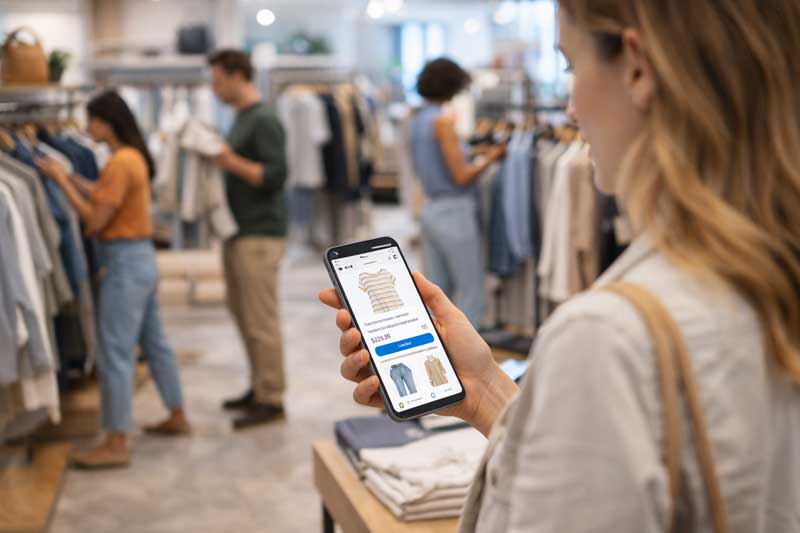
Good customer experience today means that a customer:
-
doesn’t have to repeat themselves every time they come back,
-
doesn’t receive offers that have nothing to do with their habits,
-
doesn’t feel like they’re “just another receipt” in the system.
In practice, this means the company understands the customer’s context: what they’ve bought before, how often they return, which offers they respond to—and which ones they ignore.
A customer may not be able to clearly explain why they like a certain store or brand, but they will definitely feel the difference between a generic and a personalized experience.
One more key point:
Customer experience doesn’t start at the checkout—and it doesn’t end with payment.
It begins the moment a customer starts thinking about a purchase and continues afterward—through communication, feedback, incentives to return, and a genuine sense of relationship with the brand.
The most common mistakes that damage customer experience
The first—and most common—mistake is treating all customers the same.
Many companies equate “fairness” with “equality,” offering the same discounts, the same messages, and the same campaigns to everyone.
The result isn’t satisfaction, but indifference. Customers don’t want the same offers—they want offers that make sense for them.
The second mistake is relying on discounts as a universal solution. When there isn’t enough data or a clear understanding of customer behavior, discounts become the easiest way to “do something.” Over time, this trains customers to expect lower prices and weakens loyalty.
The third frequent mistake is cutting off communication after the purchase. Many businesses invest a lot of effort in getting a customer to the transaction—but that’s where the story ends. Without a clear “what’s next,” there’s no reason for the customer to return. In reality, the post-purchase period is where habits and a sense of belonging are built.
The common denominator behind these mistakes is the absence of a system.
When decisions are made ad hoc, customer experience depends on momentary judgment, team availability, or current workload.
How to improve customer experience — concrete and actionable steps
1. Start with understanding customer behavior — not assumptions
Any serious improvement of customer experience has to begin with data analysis. It’s not enough to know how many customers you have—you need to understand who they are.
-
Who comes in often but spends little?
-
Who visits rarely but brings high value?
-
Who shows up only when there are promotions?
Without these insights, decisions are based on guesses. With them, customer experience becomes something you can intentionally design—rather than something you hope will work.

2. Personalization isn’t a name in a message — it’s context in the offer
Many businesses believe they’re being personalized because they insert a customer’s name into an email or SMS. True personalization goes much further. It means delivering an offer that makes sense based on the customer’s history, habits, and current situation.
For example, the approach to a new customer should be completely different from the approach to a loyal, active customer—or to someone who hasn’t shown up in months. When everyone receives the same tone and the same benefits, you miss the opportunity to make the experience truly relevant.
3. Reward behavior, not just spending
Customer experience improves significantly when customers feel that their interaction with the brand is valued—not just the amount they spend at checkout. Returning within a short period, trying a new category, recommending a friend, or leaving feedback are all behaviors that deserve recognition.
When you reward only spending, the experience becomes cold and transactional. When you reward behavior, you build a relationship.
Read more: How to reward loyal customers without lowering prices?
In practice, customer experience and customer loyalty are directly connected—the more consistent, personalized, and predictable the experience, the more likely customers are to return.
You need a system that improves customer experience — not just another tip
At a certain point, most companies reach the same place: the ideas are clear, but execution becomes difficult.
Manual record-keeping, spreadsheet-based segmentation, and one-off campaigns quickly become unsustainable as the number of customers grows.
That’s where the need arises for a solution that connects data, communication, and loyalty into a single, coherent flow.
That solution is Spotlight — not as an add-on tool, but as the foundation for managing customer experience.
The Spotlight loyalty platform brings together several key elements of customer experience into one system:
-
Loyalty mechanisms such as points, cashback, coupons, loyalty tiers, and gift cards create clear and transparent reward rules that customers easily understand.
-
Segmentation and a 360° customer profile ensure that every message and offer has context. Instead of mass communication, customers receive messages that match their stage in the relationship with the brand.
-
Automation ensures consistency — the experience doesn’t depend on who’s on shift today or how busy the team is.
The result for the customer is a feeling of being recognized and valued.
The result for the business is stronger loyalty, better use of budget, and clear data on what actually works.
What does improved customer experience look like in practice?
Improved customer experience shows up in small—but consistent—details.
- A customer who hasn’t visited for a while doesn’t receive a generic message or a random discount, but a reminder that makes sense based on their previous purchase.
- A regular customer doesn’t have to explain their habits every time—the system recognizes them and offers benefits that match their status.
When a customer responds to an offer, the next step is logical, without extra explanations or waiting. In such an environment, the experience no longer depends on the team’s mood or in-store rush, but on clearly defined rules that work consistently.
These situations are no longer exceptions—they’re part of the standard process.
Enable customers to gift the experience
One of the simplest—and often overlooked—ways to improve customer experience is allowing customers to gift the experience, not just the product.
Gift cards act as a true UX “shortcut.” The buyer quickly solves a gifting need without extra thinking, while the recipient gets the freedom to choose what suits them. For the business, this model has a double effect: it brings a new customer into the system and increases the likelihood that the existing customer will return. When gift cards are connected to customer profiles and ongoing communication, they stop being one-off transactions and become a starting point for building a long-term customer relationship.
How do you know you’ve truly improved customer experience?
Real indicators of improved customer experience aren’t found in isolated surveys or occasional ratings, but in concrete customer behavior over time.
One of the first signals is more frequent customer returns—not because of constant promotions, but because there’s a real reason to come back.
At the same time, average order value increases. Customers who feel secure and recognized make purchase decisions more easily and buy more, without the need for aggressive discounts.
Customer satisfaction is also reflected in how people respond to communication. When customer experience works, messages aren’t widely ignored—emails are opened, coupons are used, and there’s clear interaction with offers. The number of one-time purchases decreases, while the share of customers entering a stable relationship with the brand increases. Pressure on customer support and complaints also drops, because expectations are clearer and communication is consistent.
When these parameters rise together—customer satisfaction, basket value, return frequency, and engagement—it’s a clear sign that customer experience isn’t the result of random actions, but of a systematic approach.
At that point, results become measurable, stable, and predictable, enabling growth planning without constant “firefighting.”
FAQ: Frequently asked questions about customer experience
How can customer experience be improved in retail?
Customer experience in retail improves when shopping is simple, communication is clear, and customers feel recognized. This includes fast service, consistent rules, relevant offers, and continuity at every visit. The biggest shift happens when decisions aren’t made ad hoc, but based on customer behavior.
How is customer experience measured?
Customer experience is measured through behavior, not just surveys and ratings. Common indicators include return frequency, average basket value, response to offers, benefit usage, and a reduction in one-time purchases. These metrics provide a more realistic picture of satisfaction than isolated opinions.
What’s the difference between customer experience and customer service?
Customer service is just one part of customer experience. While service refers to direct contact (sales staff, support, complaints), customer experience covers the entire relationship with the brand—before, during, and after purchase. Good service can fix a moment, but it can’t compensate for a poor overall experience on its own.
Does customer experience affect sales?
Yes—customer experience directly impacts sales. Customers who have a positive and consistent experience return more often, spend more per purchase, and are less driven solely by discounts. Long term, strong customer experience increases customer lifetime value and revenue stability.
Why don’t customers return even if they’re satisfied with the service?
Customers often don’t return because service isn’t the only factor. Without personalization, continued communication, or a clear reason to come back, the experience remains neutral. Good service solves the moment; customer experience builds the habit of returning.
Customer experience is not improvised
If customer experience depends on individuals, it isn’t scalable. If it depends on a system that understands customers and responds to their behavior, it becomes a competitive advantage.
Companies that want long-term growth don’t need another trick—they need a structure that connects loyalty, data, and communication into one meaningful experience. That’s where the difference is made between sales that happen and relationships that last.
If you want customer experience to stop relying on improvisation and move into a measurable, scalable system, solutions like Spotlight help make that transition faster and more reliably—without losing the personal touch, and with clear insight into what truly drives loyalty.