
Discover what cross-selling is and how a loyalty program provides context for higher sales. Learn how additional offers can naturally encourage purchasing.
Cross-selling is one of those strategies everyone talks about, but few actually implement in a way that delivers consistent results. In theory, it sounds simple: offer the customer something additional that makes sense alongside their purchase. In practice, however, cross-selling often turns into a random product recommendation that fails to consider who the customer is, what they truly need, or where they are in their buying journey.
This is where the core problem emerges: cross-selling without context rarely works. Today’s customers have a high tolerance threshold for sales messages and quickly recognize when something is being “pushed” on them.
Loyalty programs change this dynamic because they introduce what cross-selling lacks most—relationship continuity and a deeper understanding of customer behavior over time.
This article has one clear goal: to explain what cross-selling is, how it differs from upselling, and why a loyalty program represents the most natural channel for its implementation—without aggressive sales tactics and without relying solely on discounts.
What Is Cross-Selling?
Cross-selling refers to a strategy in which a customer is offered an additional product or service that naturally complements what they have already purchased or are using.
The key word here is not “additional,” but “related.”
The purpose of cross-selling is not to increase the total bill at any cost, but to offer the customer a more complete solution
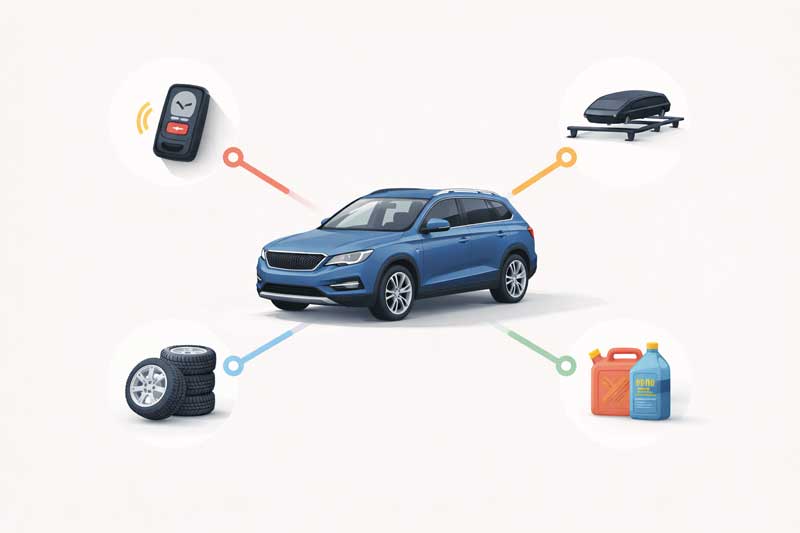
Good cross-selling doesn’t feel like selling — it feels like help.
When a customer recognizes that an additional product makes the primary product easier to use, increases its value, or solves a problem that will inevitably arise later, resistance practically disappears. The problem arises when cross-selling is reduced to automated messages with no understanding of context.
In the digital environment, cross-selling is often mistakenly interpreted as a simple “You may also like” section beneath a product. In physical retail, it’s the sentence at the checkout that comes too late and without any personalization. In both cases, the strategy exists, but the logic behind it is missing.
Today, the meaning of cross-selling is increasingly shifting away from pure sales and toward customer experience management. Customers don’t want more options — they want relevant options. And relevance cannot be guessed; it is built through data, behavior, and relationships.
Research confirms that cross-selling delivers the best results when viewed as part of relationship marketing rather than as an isolated sales tactic. A study by the University of Western Australia shows that structured, data-driven cross-selling based on existing customer information significantly increases the success of additional sales compared to random or intuitive offers. When recommendations are grounded in past behavior, purchase frequency, and product relevance, sellers are more likely to offer suitable complementary products, and customers are more likely to accept them. The research also highlights that an analytical approach to cross-selling not only increases revenue per customer but also strengthens long-term relationships, customer loyalty, and overall customer lifetime value. This approach is precisely the foundation on which loyalty programs enable cross-selling to function as a natural continuation of the customer relationship, rather than as a one-off sales push.
Cross-selling vs. Upselling – What’s the Difference?
Cross-selling and upselling are often used as synonyms, but in reality, they serve two different goals. Understanding the difference is not an academic exercise — it is a practical foundation for properly designing sales and loyalty strategies.
-
Cross-selling aims to expand the purchase by adding products that complement the customer’s primary choice.
-
Upselling, on the other hand, aims to increase the value of a single purchase by offering a more expensive or advanced version of the same product.
A customer can be an ideal candidate for cross-selling but completely unsuitable for upselling — and vice versa.
Problems arise when both approaches are used without understanding context. For a customer who is just beginning a relationship with a brand, upselling often feels premature. For a loyal customer with experience using the product, cross-selling without any signal of exclusivity can feel trivial.
In practice, without a loyalty program, both concepts are reduced to generic messages that ignore the history of the customer relationship.
Loyalty data and customer analytics make it possible to clearly identify when a customer is ready to expand their purchase and when they are ready to move to a higher tier of offering. Without this insight, both cross-selling and upselling remain attempts — not strategies.
Why Cross-Selling Rarely Works Without a Loyalty Program
If cross-selling relies solely on the current transaction, without insight into the broader picture of customer behavior, the chances of success are limited. In that case, recommendations are based on assumptions rather than real signals — and customers recognize this very quickly.
Without a loyalty program, you lack answers to basic questions: Is this the customer’s first purchase? Are they returning? Do they already use similar products? How often do they buy? How engaged are they? Without this information, cross-selling becomes pure statistics — “someone might click.”
Timing is another major issue. A cross-selling offer delivered at the wrong moment can have the opposite effect. A customer who is still unsure about the core product is not ready to consider additional options. Without loyalty signals, timing becomes guesswork.
This is why many companies reach the false conclusion that cross-selling “doesn’t work.” In reality, it fails because it is executed without a system capable of connecting customer behavior across multiple touchpoints.
A loyalty program is exactly that system.
How the Spotlight Loyalty Program Changes the Way Cross-Selling Works
In traditional sales approaches, cross-selling is most often tied to automatic product recommendations or “similar products you might like.” This approach is common in many systems, but it usually ignores what matters most — context and the history of the customer relationship.
Without context, cross-selling becomes little more than a visual suggestion with limited impact on customer behavior.
The Spotlight loyalty program changes this dynamic by treating purchases not as isolated events, but as a sequence of behaviors that can be tracked, analyzed, and used to create personalized offers. This is not a small difference — it is a transformation from simple product recommendations to a data- and relationship-driven strategy.
1. From Random Recommendations to Customer Understanding
Without CRM insight, a system doesn’t know who the customer is — whether this is their first interaction, a loyal buyer, or someone who purchases rarely. Spotlight enables every customer to be identified, segmented, and analyzed over time. This provides deep insight into:
-
what the customer buys most often
-
which product categories they prefer
-
how frequently they return
-
which products they have combined in previous purchases
Instead of offering random add-ons, Spotlight enables cross-selling based on logical and contextual extensions of actual customer behavior.
2. Personalized Communication That Creates Real Relevance
A common flaw in traditional cross-selling is sending the same messages to everyone. This results in customers seeing too many irrelevant offers, which reduces engagement and ROI.
Spotlight enables targeted, personalized messages based on loyalty data. Instead of one generic message, the customer receives an offer that:
-
aligns with their previous purchases
-
reflects their loyalty status (new member, active customer, VIP)
-
arrives at the right moment (e.g., after a certain purchase cycle or period of inactivity)
As a result, messages feel like helpful suggestions rather than sales noise.
3. Long-Term Relationships Instead of One-Off Transactions
Traditional cross-selling often focuses solely on increasing average order value at the moment of purchase. Spotlight shifts the focus from single transactions to long-term relationships and repeat buying.
Through segmentation and defined loyalty tiers, cross-selling becomes part of an ongoing interaction flow:
-
customers receive different recommendations at different stages of the relationship
-
recommendations are based on history, not just the current transaction
-
cross-selling is integrated into the overall customer experience
This builds trust and increases acceptance because customers feel supported, not sold to.
4. Exclusivity and Status as Behavioral Triggers
One of the strongest elements Spotlight introduces is status and exclusivity. Instead of presenting add-ons as generic options, offers can be tied to loyalty levels:
-
higher-tier members see exclusive cross-selling offers
-
premium or upgraded products are shown to high-status customers
-
certain add-ons are reserved only for loyal users
This turns cross-selling from a suggestion into a privilege.
5. Data Integration and Automation Without Losing Relevance
Spotlight is not just a points or status platform — its strength lies in analytics and marketing automation. Loyalty data is used to define rules that automatically trigger relevant cross-selling offers across channels:
-
email campaigns
-
push notifications
-
personalized product sections on the website
This allows companies to scale cross-selling without manual effort while maintaining a high level of relevance and personalization.
Spotlight transforms cross-selling by embedding it into customer behavior and relationships, rather than treating it as isolated product recommendations. Through segmentation, personalization, data integration, and strategic communication planning, Spotlight enables companies to turn cross-selling from a “sales shot” into a reliable path toward higher customer value and long-term loyalty.
Cross-Selling Without Points: How a Loyalty Program Works Without Rewards
One of the most common misconceptions is that a loyalty program must rely on points and discounts to be effective. In practice, the most successful cross-selling often happens without any direct customer rewards at all.
Status, exclusivity, and a personalized approach have a far stronger psychological impact than points.
When a customer realizes that an offer is presented because they are recognized as loyal or relevant—not because it’s a generic “promotion”—their perception of value changes.
A loyalty program makes it possible to frame cross-selling offers differently: as a privilege, as early access, as a members-only recommendation, or as a next step that is “reserved” for a specific level of relationship. In this context, the customer doesn’t feel pressure, but rather confirmation that they’ve made the right choice.
This approach is especially important in B2B and premium segments, where discounts can actually damage brand perception. In those cases, cross-selling through a loyalty program becomes a tool for strengthening relationships, not just increasing short-term revenue.
The Most Common Cross-Selling Mistakes in Loyalty Programs
One of the biggest mistakes is treating all loyalty members as a single, homogeneous group. When everyone receives the same recommendations, personalization loses its purpose.
Another frequent mistake is communication overload—too many offers in a short period of time create resistance.
The third mistake is focusing solely on selling, without explaining value. Customers don’t want to be sold to; they want help making better decisions. A loyalty program should be a tool for that—not a channel for spam.
How to Start Cross-Selling Through the Spotlight Loyalty Program in Practice

1. Don’t Start With Products — Start With Customer Behavior
The most common mistake in cross-selling is starting with the question:
“Which products do we want to sell more of?”
In the Spotlight context, the right question is:
“How do our customers actually behave?”
Before designing any cross-sell offer, Spotlight lets you analyze:
-
how often customers purchase
-
which categories they combine
-
how much time passes between purchases
-
whether they return or disappear after the first purchase
This is not analytics for reporting’s sake — it’s the foundation for decision-making.
Cross-selling only begins once you understand what customers are already doing without any incentive. Anything built on top of that has a much higher chance of being accepted.
2. Create Basic Segmentation (and Don’t Overcomplicate It)
You don’t need ten segments to get started. In practice, three are enough:
-
New customers — just entering a relationship with the brand
-
Active customers — purchasing regularly, without special status
-
Loyal / VIP customers — high purchase frequency or value
Spotlight allows you to define these segments based on real behavior, not assumptions. This is critical, because cross-selling should not look the same for every segment.
If you send the same add-on offer to both a new customer and a VIP customer, cross-selling won’t work — regardless of the tool.
3. Define “Logical Pairs,” Not an Add-On Catalog
The next step isn’t a campaign — it’s thinking.
Ask yourself:
“Which products naturally go together — from the customer’s point of view?”
Not from the warehouse perspective.
Not from the margin perspective.
But from the usage perspective.
In practice, this means:
-
a consumable product → a product used afterward
-
a core product → an add-on that improves the experience
-
a recurring purchase → a premium version as the next step
Good cross-selling isn’t broad — it’s precise.
4. Choose the Right Moment, Not Just the Right Product
Timing is often more important than the offer itself.
Spotlight enables cross-selling beyond the moment of purchase. In practice, better results often come:
-
after a successfully completed purchase
-
after a repeat purchase
-
when a customer stays within the same category
-
when a customer approaches the next “relationship step” with the brand
Instead of “Add this too,” the message becomes:
“Based on what you already use, this is the next thing that makes sense.”
That completely changes how customers perceive the offer.
5. Don’t Lead With Discounts — Use Loyalty Context
One of the biggest advantages of the Spotlight loyalty program is that cross-selling doesn’t have to rely on discounts.
In practice, you can start with:
-
recommendations “reserved for members”
-
early access to additional products
-
personalized suggestions in the app or user account
-
messages referencing previous behavior, not price
When customers feel addressed as loyal members, their trust threshold is higher and resistance to additional purchases is lower. This is especially important in B2B, premium, and retail segments where discounts erode long-term value.
6. Automate — Without Losing Logic
Once segments, product pairs, and timing are defined, Spotlight enables full automation without sacrificing relevance.
That means:
-
cross-sell offers don’t depend on manual campaigns
-
messages are triggered by behavior
-
each segment sees different content
Automation is not the goal in itself. The goal is consistent, high-quality cross-selling that works even when teams don’t have time for constant manual optimization.
7. Measure Response — Not Just Sales
Finally, it’s important to understand that cross-selling is not only about whether an add-on product was sold.
In Spotlight, you track:
-
whether customers return faster
-
whether purchase frequency increases
-
whether resistance to communication decreases
-
whether long-term customer value grows
Cross-selling that works in the short term but damages the customer relationship is not good cross-selling.
Using Multiple Communication Channels for Cross-Selling
Don’t Send the Same Cross-Sell Everywhere — Assign Roles by Channel
The most common omnichannel marketing mistake is sending the same message via SMS, Viber, email, and push. This doesn’t increase impact — it increases resistance.
The logic should be:
-
Email explains
-
Push reminds
-
Viber engages
-
SMS triggers action
Cross-selling shouldn’t hit from all channels at once — it should be built through touchpoints.
Email: Context and Explanation
Email marketing is the strongest channel for educational cross-selling. You don’t sell here — you explain why the add-on makes sense.
How to use it:
-
after purchase: “How to get the most out of what you bought”
-
through guides, tips, usage examples
-
subtly introducing the additional product as part of the solution
Email is ideal for:
-
complex products
-
B2B offers
-
premium or higher-priced add-ons
Email is the foundation of cross-selling — not the final push.
Push Notifications: A Light Trigger at the Right Time
Push notifications are short and contextual. They don’t explain — they prompt attention.
How to use them:
-
reminders for naturally related products
-
signaling that a “next step” exists
-
short, unobtrusive messages without prices or discounts
Example logic:
Customer buys a core product → uses it for a while → push:
“Customers who use X often add Y.”
Push is ideal for customers who already have experience. Trying to explain via push reduces effectiveness.
Viber: Personal and Human Cross-Selling
Viber feels more personal than email and more serious than push. That makes it ideal for personalized cross-selling.
How to use it:
-
when the customer is already active
-
when the offer clearly connects to behavior
-
when the message should feel like a recommendation, not a campaign
Viber works best for:
-
loyalty members
-
segmented offers
-
combining information with a gentle call to action
If email builds understanding, Viber builds decisions.
SMS: The Final Step, Not the First
SMS is the most direct channel and should never be the starting point for cross-selling. It works best when the customer is already “warmed up.”
How to use it:
-
as a final reminder
-
for time-limited offers
-
for very clear, simple messages
SMS cross-selling only works if:
-
the customer already understands why the offer exists
-
the message is short and concrete
-
context has been built in other channels
Otherwise, SMS quickly turns into spam.
The Real Power of Spotlight
Spotlight’s strength isn’t in the number of channels — it’s in the fact that all channels react to the same customer behavior.
That means:
-
email is sent because a purchase was completed
-
push is triggered after a defined time period
-
Viber goes only to active members
-
SMS is used only if previous channels didn’t convert
Cross-selling then becomes not a campaign, but an automated flow tailored to each customer.
Frequently Asked Questions About Cross-Selling
What is cross-selling?
Cross-selling means offering a customer an additional product that makes sense alongside what they already buy or use. The goal isn’t to sell more at any cost, but to offer a logical extension that adds value.
What’s the difference between cross-selling and upselling?
Cross-selling adds related products to an existing purchase, while upselling offers a more expensive or advanced version of the same product.
Does cross-selling work without discounts?
Yes. When an offer is relevant and delivered at the right time, discounts aren’t essential. Customers accept meaningful cross-selling more often than cheap cross-selling.
How does a loyalty program support cross-selling?
A loyalty program provides context: who the customer is, what they buy, and how loyal they are. With this data, cross-selling becomes a personalized recommendation instead of a generic sales message.
When is the right time for a cross-sell offer?
When the customer already has experience — after the first or repeat purchase, or when approaching the next step in the relationship. Timing often matters more than the offer itself.
Starting cross-selling with the Spotlight loyalty program doesn’t mean launching another sales campaign. It means changing the mindset — from “What else can we sell?” to “What makes sense for this customer at this moment?”
When cross-selling is built on behavior, context, and relationships, it stops being a tactic and becomes part of the customer experience. That’s where Spotlight delivers its greatest value.