How to prevent seasonal campaigns from eating up your budget? In front of you is a detailed annual, month-by-month plan with concrete ideas, mechanics, and a strong focus on continuity.
Seasonal campaigns are not the problem. The problem starts when every campaign begins “from scratch”: a new customer list, a new message, a new discount—and the same old stress for the team. At that point, campaigns stop being a strategy and become a reaction. And worst of all, you usually come out of that cycle with higher revenue, but lower margins, an exhausted team, and customers who have learned to wait for the next discount.
This text is designed to break that habit and show you how to set up a system once—and then simply adapt it to each season.
The idea is simple: the season changes, but the system stays the same.
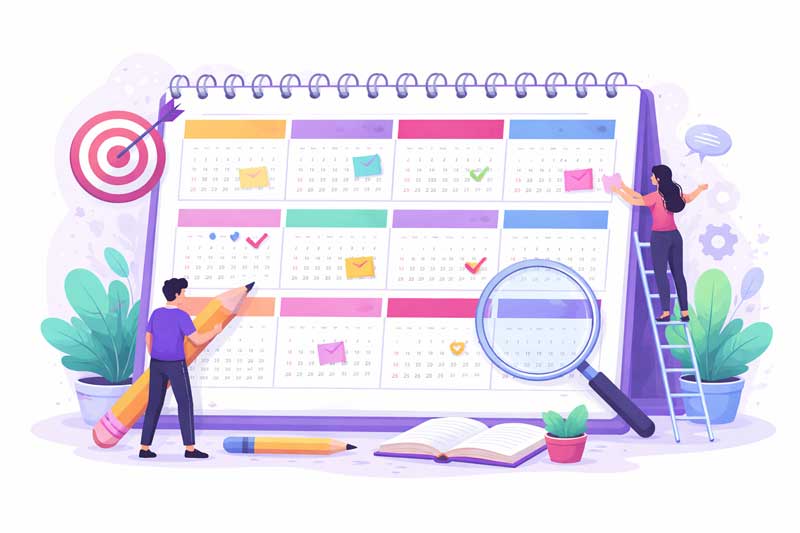
If you want to run campaigns “like a product” (repeatable, measurable, with growth month after month), you need a calendar and clear mechanics. Below is an annual campaign calendar. Save it—you’ll come back to it.
As for the mechanics, we recommend taking a closer look at everything Spotlight offers.
3 rules for seasonal campaigns – before the calendar

Rule 1: One campaign = one main goal
The most common mistake is trying to do everything in a single campaign: acquire new customers, reactivate old ones, increase average order value, test a new category, and “push” the VIP base—all at once. The result is a message that resonates with no one.
So before you write a single word, choose one goal. For example: “This month we’re increasing purchase frequency among active customers,” or “This month we’re reactivating customers who haven’t bought in 60 days.”
With one clear goal, it becomes easy to choose the right mechanic (voucher, cashback, points, tier benefit), the right segment, and to measure results properly.
Spotlight is particularly useful here because it relies on data and customer segmentation, not on mass “one message fits all” communication.
Rule 2: An offer is not the same as a discount
A discount is the fastest—but also the most expensive—way to drive a short-term sales spike. If you repeat it often, customers learn the pattern: “I buy when it’s on sale.”
An offer is much broader: points redeemed for benefits, segment-specific coupons, cashback valid for the next purchase, gift cards that expand your customer base, VIP tiers with privileges, early access, free shipping, personalized rewards.
The point is to plan the year so you’re not repeating the same thing every 2–3 weeks. Rotating mechanics protects your pricing and preserves brand value.
Rule 3: Seasonality is just the trigger—the real win is segmentation
The same message sent to everyone is the most expensive message. Not because it’s “bad,” but because it wastes budget and attention. When you message everyone, two groups always lose: VIP customers get an offer that’s too generic (damaging their sense of exclusivity), while inactive customers get something that’s not strong enough to bring them back.
The solution is segmentation: by value, frequency, recency, product categories, and on-site behavior. RFM logic (recency, frequency, monetary value) is one of the most practical foundations—it quickly shows who your most valuable customers are, who’s at risk of leaving, and who’s just entered the journey.
Spotlight positions itself as a platform that connects data and enables targeted actions, instead of “loud” marketing.
Marketing automations that work between seasons—set them once, run them all year
If you want seasonal campaigns to feel lighter, you first need to remove everything repetitive from your plate.
That’s where automated marketing flows come in—flows that work even when there’s no active campaign and keep sales steady during “normal” days.
Why does this matter?
Because campaigns then become an amplifier, not the only source of revenue.
Core flows to set up include:
-
welcome (first registration or first purchase),
-
post-purchase (instructions, replenishment, cross-sell, review),
-
win-back (30/60/90 days of inactivity),
-
birthday (time-limited, but smartly defined offers),
-
abandoned cart / browse (for e-commerce).
Spotlight enables marketing automation and multi-channel communication (email, SMS, Viber, push), triggered by behavior and planned based on real insights.
For e-commerce businesses, an additional advantage is the widget: an integrated on-site element that connects purchases in real time and shows customers their points, rewards, and personalized offers. This detail matters because it reduces friction—customers don’t have to “trust” they’ll get something later; they see it immediately in the cart or at checkout.
Annual campaign calendar: monthly ideas
Below is a framework for seasonal campaigns, month by month.
Each month is written so you can copy it directly into a brief: goal, mechanics, segments, and tactics (channels + automations). The idea is to give you a clear base plan that you can then adapt to your assortment and specific seasonality.
January: A “reset” without selling out your identity
January is the month when December’s consequences show up: lots of new customers acquired through holiday shopping, many one-off purchases, and a high risk that everything “goes quiet” once the festive motivation disappears.
That’s why January is perfect for a smart reset—bringing the rhythm back without aggressively slashing prices.
The main goal in January is a combination of two things:
-
retain customers who made their first purchase in December, and
-
re-engage those who bought in Q4 but cooled off after the holidays.
If you treat January like a mini Black Friday, you’ll lose margin and train customers to expect discounts at exactly the moment when you want to break that habit.
What works in January are mechanics like double points on selected categories or cashback for the next purchase, instead of an immediate -30%.
This kind of benefit does two important things: it gives customers a reason to come back (because the reward is tied to the next purchase), and it protects your front-line pricing.
Spotlight tactic: set up a win-back flow for customers inactive for 30–60 days and keep it separate from the welcome flow for December newcomers.
For dormant customers, channel escalation often works best: start with Viber and a visually clear offer, follow with an SMS as a short reminder, then an email with details and proof (what they get, until when, how).
February: Gifts that bring in new customers
February is ideal for growth without classic “paid” acquisition stress. People are buying gifts (most often for Valentine’s Day), and gifting is the easiest way for someone new to enter your brand—without you paying for ads. The main goal in February is acquisition through gifting, but also activation of those new people once they receive the gift.
In other words: you don’t just want to sell a gift—you want the gift recipient to become a customer.
Mechanics: gift cards (physical and digital) and gift programs. They generate revenue upfront, while the actual purchase happens later. Spotlight, beyond issuing gift cards, enables tracking and analytics of how they’re used (where, when, how). That’s critical: a gift isn’t just a “product,” it’s a data source and an entry point into your database.
February segments are dual:
-
your most loyal customers, who are the most likely gift buyers, and
-
occasional customers who need a “reason” to remember you.
Tactics: launch the gift campaign via Viber and email (because it needs more explanation), then automate reminders: 7 days before the date and 48 hours before (SMS/push) for those who clicked but didn’t purchase. This way you drive extra sales without extra budget—and with clear insight into which messages work.
March: International Women’s Day and the “mini VIP” moment that lifts basket value
March is a month of buying in waves: certain categories spike for a few days and then quickly cool down. This makes it ideal for a campaign that increases average order value and strengthens customer loyalty—without sounding like you’re begging customers to buy.
The main goal in March: get customers to spend a bit more than usual and feel recognized, especially those who already spend.
Mechanics: reward thresholds. For example: above amount X you get a coupon; above amount Y you get a bigger benefit (more points, a stronger coupon, free shipping, an extra gift).
An alternative is “VIP early access”: the VIP segment gets the offer before everyone else, within a shorter window. Why does this work? Because you give customers a concrete reason to add one more item to their cart, while keeping margin under control (you know the threshold and the cost of the benefit).
Spotlight tactic: segmentation by purchase value and frequency, with a dedicated RFM top-customer segment.
Channels: Viber for the “offer of the day” (visual, fast), email for the full selection and explanation of thresholds, and push notifications as a last-24-hours reminder that creates urgency without aggression. If you have an e-commerce widget, amplify the effect by showing customers in-cart how much they’re missing to reach the threshold and what they’ll get.
April: Spring refresh
April is great for campaigns that don’t sound like campaigns. People often change routines, try new things, and are more open to recommendations—but they’re tired of constant discounts. April should feel “helpful”: guide customers, help them choose, and gently introduce them to a new category.
The main goal in April is cross-sell and reactivation.
Mechanics: personalized recommendations + points for a second category. For example, customers who buy category A get a benefit to try category B. You don’t discount what they already buy (that’s wasted budget); instead, you use incentives to expand habits and deepen brand connection.
Spotlight tactic: segment by interests and behavior, then set up an automated flow: “bought A → after 10 days, offer B,” with performance analytics per flow. That analytics layer is crucial—after 30 days, you’ll know whether B truly complements A or not.
May: Holidays, long weekends, short windows
May is all about short windows: extended weekends, travel, shifting routines. That means campaigns need to be short, clear, and instantly understandable.
The main goal in May is quick revenue—without creating a dependency on discounts. That’s why May is ideal for short-expiry vouchers or cashback valid for 14 days. The difference is big: a 48-hour voucher triggers a “buy now” decision, while a 14-day cashback triggers “I’ll come back.”
Mechanics: short-term vouchers (48h) or cashback.
Segments: if you have multiple locations, May is perfect for local targeting (by city or neighborhood), plus active customers who just need a small nudge.
Spotlight tactic: use SMS/push for urgent actions (fast channels), and Viber for visually clear offers.
The most important May rule: anyone who redeems a voucher automatically enters a “repeat purchase” flow (rewarding continuity, not one-off buying). That way, May isn’t a firework—it’s a bridge into June.
June: “Summer is starting” – preparing the base, not just running promos
June is a preparation month. If you spend it only on discounts, July and August will require even bigger incentives to grab attention.
The main goal in June: strengthen loyalty habits and increase the number of users “in the system” (app/loyalty identification), making the second half of the year much easier. Campaigns in June don’t need to be big—they need to be smart and focused on building the base.
Mechanics: points for interactions. Not just for purchases, but for registration, profile completion, reviews, account activation, and opting into communication channels.
Segments: new customers from the first half of the year and customers who buy but don’t have a “loyalty identity” (they’re not identified or using benefits).
Spotlight tactic: set up a 3-message push flow over 10 days (no spam), where each message has one benefit and one clear action.
-
Message 1: “Activate your account and get X.”
-
Message 2: “Complete your profile and get Y.”
-
Message 3: “Your first review earns you Z.”
July: Lower frequency, higher precision
July is the month when attention drops, but marketing costs often rise—because everyone tries to “outshout” summer. If you go broad and loud, you’ll burn budget for minimal effect.
The main goal in July is to maintain sales with minimal noise: campaigns should be precise, personalized, and light. In July, the winner isn’t the one who sends the most messages, but the one who sends the best ones.
Mechanics: behavior-based personalized offers. That means giving active customers a small incentive that nudges them to buy once more, while offering VIP customers exclusivity (early access, a special benefit, a status signal).
Segments: active and VIP—kept strictly separate. You never send “cheap” messages to VIPs, because that erodes loyalty on an emotional level.
Spotlight tactic: RFM logic (Recency, Frequency, Monetary) for VIPs (exclusives), and fast, simple offers for active customers.
At the same time, monitor customer analytics: which flows generate revenue and where customers drop off. In July, the goal is not to exhaust your base, but to preserve it for August and September.
August: Between pause and full speed
August is a transition month. Not everyone is on vacation, but many are just getting back into rhythm. It’s the ideal time to increase purchase frequency and prepare for September, which is often the strongest month for loyalty.
The main goal in August: re-establish purchasing rhythm among customers who bought in spring but paused during summer. This group is close—but not guaranteed. If you don’t activate them now, they’ll be cold by October.
Mechanics: threshold + voucher for the next purchase. The idea is to “load” September through August. Customers buy in August and receive a benefit valid in September (voucher, cashback, multiplied points). This creates continuity, not a one-off spike.
Spotlight tactic: win-back flows based on inactivity with channel escalation (email → Viber → SMS). This is especially effective because August is fragmented: customers see an email but postpone; Viber brings them back; SMS closes the loop when they’re already close to deciding. Spotlight’s multi-channel automation helps you do this without manual chasing.
Key rule: one message, one offer, one deadline. No storytelling. August is a fast month.
September: The month that defines Q4
September is often the healthiest month for loyalty: routines return, spending stabilizes, and customers are more open to systems—not just promotions.
The main goal in September is increasing purchase frequency. If you do September right, Q4 becomes easier because you’re not dependent solely on November and December.
Mechanics: tiers (VIP levels) or challenge series. Tiers are ideal if you want customers to “grow” through status—more spending unlocks better benefits and privileges.
Challenges are great for quick results: “3 purchases in 30 days → reward.”
Spotlight tactic: define loyalty rules (a mix of points, coupons, vouchers) and connect communication channels, with the e-commerce widget displaying benefits in real time.
Segmentation: active customers get the challenge; dormant customers get an easier first step (e.g., “first purchase brings a benefit”).
September is when the system wins—use it to set the rules that will apply in Q4, instead of improvising later.
October: The month of deliberate decisions
October is preparation for Q4. If you skip October, November will be panic-driven—and panic is usually solved with discounts.
The main goal in October is margin repair and base preparation ahead of big waves. You don’t need a huge promotion; you need a smart structure: who’s VIP, who’s active, who’s dormant, who’s new, who’s ready to buy gifts.
Mechanics: gift cards + early access to Q4 offers. Gift cards are ideal in October because they introduce gifting before December, while early access motivates your most valuable customers to buy before the rush. Spotlight’s gift program enables fast setup of physical and digital cards with usage analytics—perfect for preparing December without risk.
Spotlight tactic: scheduled automated communication and segments of frequent buyers. Early access goes to VIPs; gift messaging goes to loyal customers who realistically buy gifts.
October is ideal for testing messages: which headlines work, which benefits are understood, whether customers respond more to status or thresholds.
November: Black Friday without destroying value
November is the most dangerous month for a brand. Revenue can be huge, but habits formed here can damage the entire next year.
The main goal in November should be threefold, clearly structured:
-
revenue,
-
onboarding new customers into loyalty,
-
data collection and segmentation to support December and January.
The point is for Black Friday to be not “just a discount”—but an “entry into the system”.
Mechanics: layered offers. Instead of one big discount for everyone, combine smaller discounts with points/cashback and a benefit for loyalty registration.
Segments: new, active, and VIP. VIPs get exclusivity first (early access or special benefits), active customers get basket-lifting offers, and new customers get a simple, clear offer that brings them into loyalty.
Spotlight tactic: CDP + segmentation and habit-based personalization with multi-channel execution—email for details, Viber for visuals, SMS/push for urgency.
December: Holidays as the gateway to the next purchase
December is the easiest month to drive revenue—and the easiest month to create a January problem. If December becomes one big discount, you’ll get one-off buyers and a silent base afterward.
The main goal in December: maximize Q4 while setting up January. Every December purchase should have a continuation—a reason to return after the holidays.
Mechanics: gift cards + a January voucher with every purchase. It doesn’t need to be big. The goal isn’t to “give more,” but to give a next step. Spotlight’s gift program is especially relevant in December because gift cards expand the base, generate early revenue, and provide usage analytics.
Spotlight tactic: run the gift program as a standalone campaign (it has its own flow), and use post-purchase automation to lock in January: a thank-you message, short instructions, next-purchase suggestions, and a “January benefit” valid in the first half of the month.
How to turn this into an operational plan?
To keep this from becoming “just a nice text,” introduce a simple operating rhythm.
First, reserve the end of each month for reporting: which segments drove revenue, where drop-off happened, which channel performed best. Spotlight provides clear analytics and activity insights—exactly what you need to decide quickly what to repeat and what to change.
Second, use the first week of each month for one seasonal campaign and one optimization of an always-on flow. You’re not creating ten new things—you’re building a system.
Third, use mid-month for channel-based A/B testing: what works in email often doesn’t work in SMS, and Viber requires visual clarity.
Most important: campaigns must not exist separately from loyalty.
Campaigns are short-term impulses. Loyalty is a habit. When the two are connected, you stop buying revenue with discounts and start building it with a system.
Frequently asked questions about seasonal campaigns
1) What are seasonal campaigns?
Seasonal campaigns are planned marketing activities tied to specific periods of the year. Their purpose is to follow customer behavior and ensure sales continuity—not just short-term spikes.
2) Why do seasonal campaigns often fail long term?
Because they’re run in isolation, without connection to previous actions. When every campaign starts from zero, neither purchase habits nor loyalty are built.
3) Do seasonal campaigns have to be discounts?
No. Instead of constant discounts, effective seasonal campaigns use points, vouchers, cashback, gift cards, or early access—depending on the goal.
4) How can seasonal campaigns be profitable?
By having one clear goal and targeted segments. When messages aren’t sent to everyone equally, costs drop and results stabilize.
5) Why is an annual plan important for seasonal campaigns?
Because it connects campaigns and lets them build on each other throughout the year. Planning reduces improvisation and keeps marketing strategic, not reactive.
The season changes, but the system doesn’t
The biggest difference between campaigns that last and those that are forgotten is planning.
With structure, each season builds on the previous one instead of wiping it out.
If you want campaigns with continuity—not just short-term impact—get in touch and set them up as a system that works all year