Holiday promotions can bring more than a temporary sales spike.
A loyalty program turns seasonal shoppers into long-term customers — and holiday offers into a lasting advantage and a growing customer base.
Holidays are the period when “everyone has a promotion.”
Wherever you look — banners, newsletters, ads — holiday discounts, holiday deals, holiday sales pop up everywhere.
Customers expect a discount, and brands expect a sales spike.
The problem is that most of those promotions end the moment the holiday “magic” fades.
The customer uses the discount and leaves — often without a single reason to return specifically to you instead of the competition.
The essential question for every serious retailer, retail chain, or brand is:
Are you running holiday promotions just to “boost sales,” or to build loyalty and a customer base for the entire next year?
The answer is the difference between yet another seasonal sale and a smart system in which every holiday discount works in favor of long-term customer loyalty — through a well-designed loyalty program.
What do we mean today when we say “holiday promotions”?
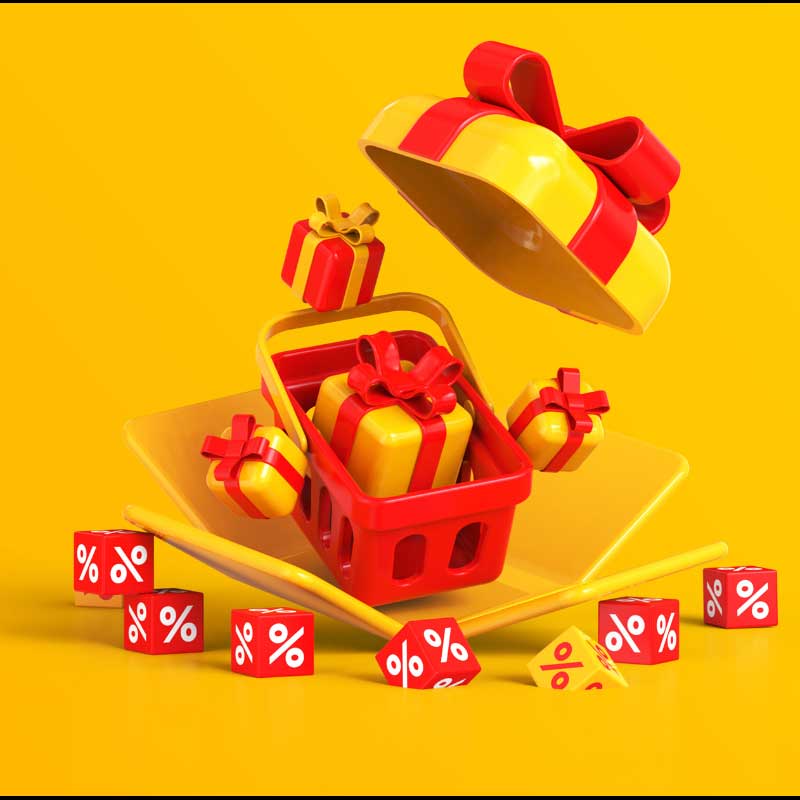
• Black Friday and Cyber Monday discounts
• New Year’s, Christmas and Easter sales, Halloween
• special holiday offers on selected categories
• 2+1 deals, free gifts with purchase, free delivery, extended return periods…
In other words, these are short-term campaigns designed to attract as many customers as possible in a very short period of time.
There was a time when writing “–20% on everything” was enough.
Today, within five minutes a customer checks the competition, compares prices, and decides where to spend their time and money. Holiday offers have become a sea of identical messages – and everything boils down to who can lower the price more.
That’s where the problem starts:
• margins suffer
• customers see you as “just another brand giving a discount”
• you don’t know who bought during the holidays — and you can’t work with them afterward
This is why holiday discounts without a loyalty program are often just an expensive marketing cost, not an investment in future sales.
What customers expect from holiday offers (and it’s not just a lower price)
The modern customer is very clear: they want to save money, but not at any cost and not anywhere.
From holiday offers they expect:
• clear savings – a discount, coupon, points or a gift with real value
• convenience – fast shopping, clear offers, predictable delivery, simple returns
• a feeling of being “special” – VIP treatment, early access to discounts, something not available to everyone
Research shows that a significant number of customers check whether a brand has a loyalty program and what benefits it provides — not just the size of the current discount.
In other words, people don’t chase “another –10%” — they want a system where it pays off to shop with the same brand long-term.
If you don’t have a loyalty program, every holiday promotion goes into the same box:
the customer will compare you exclusively by price and possibly delivery speed.
If you do have a loyalty program, holiday discounts suddenly gain a new dimension:
the customer sees that they are saving now and building benefits for after the holidays — and that’s where brand loyalty begins.
The role of a loyalty program in holiday promotions
Here we reach the key point: holiday promotions are the ideal “trigger” for customers to join a loyalty program.
Instead of letting a customer come, use a discount and vanish, you guide them through a path:
- use the holiday discount
- join the loyalty program (to get even more value), install discount app
- keep buying from you after the holidays, because now they have a reason to return
Data shows that loyalty-program members spend more on average and shop more frequently than those who are not members, and a large percentage of consumers say that loyalty-program offers directly influence which brand they choose, and whether they will spontaneously become that brand’s ambassadors.
Spotlight is a platform for loyalty programs and customer communication that does exactly this for you:
• collects customer data (registration, purchases, communication channels),
• segments customers (new, regular, VIP, “inactive”)
• allows you to tailor holiday promotions by segment instead of sending the same discount to everyone
• automatically sends marketing messages (Viber, push, SMS, e-mail) with offers that make sense for each customer
• measures results — how loyalty members shop during the holidays and what happens afterward
The loyalty program is not an add-on to holiday promotions, but the engine that drives them and turns every campaign into data, contacts, and loyalty you can use all year long.
Holiday-promotion strategies built around a loyalty program
Once you have a loyalty program and a platform like Spotlight, holidays stop being “–20% on everything” and become much smarter.
Exclusive holiday offers for loyalty members
The simplest step: make the best discounts during the holidays available only to loyalty program members.
It can look like this:
• a day earlier: “early access” to holiday discounts for members — they see the offer before everyone else
• special discount coupons or prices that apply only when scanning a loyalty card / using the app
• VIP evening shopping or private promotions for top customers
The psychology is simple: people love feeling like they are not “just another customer.”
When they see they get better holiday offers simply because they are members, both loyalty and average oder value grow.
Spotlight helps you:
• clearly identify loyalty members in the database
• send them special communication (e.g., push notifications with “early access”)
• track in real time how this group reacts compared to others and their overall customer satisfaction.
Holiday discounts through points, multipliers and rewards
A monetary discount is only one way to reward a customer.
With a loyalty program you can create holiday promotions such as:
• “double points on all purchases in December”
• “triple points on top holiday-gift products”
• special rewards for customers who collect X points during the holiday season
Instead of everything ending at checkout, the customer leaves feeling like they have “filled their loyalty account” — and will be able to use benefits after the holidays.
Holiday promotions that collect data — not just sales
Holidays are the perfect moment to “get to know” your customers because they’re motivated by discounts or rewards.
Instead of just “–30% on everything,” you can:
• organize a quiz (“what type of shopper / gift-giver are you?”) tied to loyalty registration
• offer extra points for completing profile data (birthday, preferences, favorite store…)
Spotlight connects all of these to individual customer profiles, so after the holidays you have a database where you know who bought what, what offers they prefer, and which channel they respond to.
Emotional holiday campaigns and charity actions
Holidays aren’t only about shopping — they’re about emotion.
A loyalty program can create a difference that isn’t measured only in money.
For example:
• a portion of every purchase made by loyalty members goes to charity
• customers can choose to donate part of their points instead of taking a discount
• special campaigns where points are doubled if spent on “charity rewards”
These campaigns not only create a positive brand image — they build a deeper connection with customers who feel they are doing something good with you, not just “chasing another discount.”
Omnichannel holiday promotions – when loyalty connects online and offline
Today’s customer doesn’t think in “online/offline” categories.
They check a product on their phone, reserve it online, pick it up in store, and buy something extra along the way.
Successful holiday promotions must be consistent across:
• website & web shop
• mobile app & push notifications
• Viber / SMS / e-mail
• physical stores
Studies show that a large portion of holiday sales now comes from mobile devices, and brands with integrated channels + a loyalty program achieve better results because the customer sees one unified story — not a pile of unrelated promotions.
Spotlight handles what is hardest to do manually:
• one customer ID across all channels (store, website, app)
• tracking how the same customer reacts to different holiday offers
• automatic sending of the right message in the right channel (e.g., e-mail for gift lists, Viber for last-minute deals)
The result of this approach to online communication: the customer feels like they are communicating with one brand, not five different “channels” — and is therefore more likely to use their holiday discounts with you.
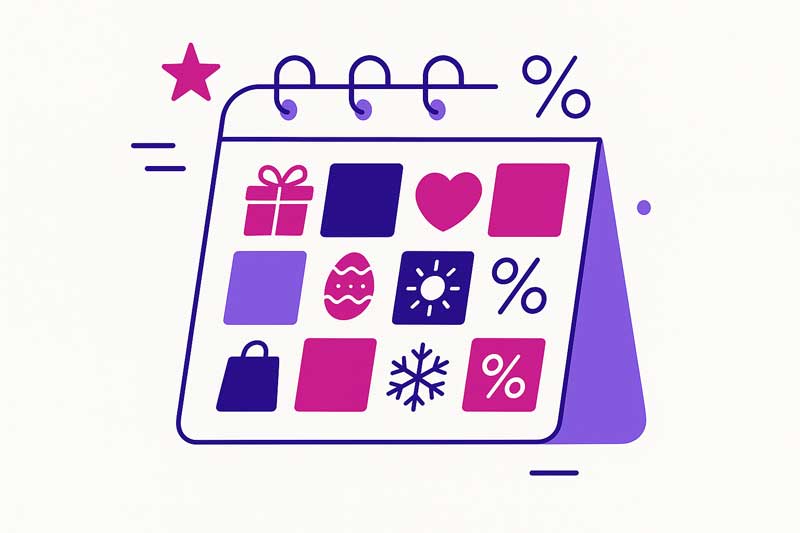
Holiday Campaign Calendar – How to Plan Promotions for Every Key Period of the Year
The biggest mistake brands make with holiday promotions is thinking only about December.
One newsletter on December 24th, one “discount on everything” — and that’s the whole strategy.
Customers don’t function like that anymore.
Holiday shopping is no longer a single event; it’s a cycle that repeats throughout the entire year: Valentine’s Day, March 8th, Easter, start of summer, Back to School, Black Friday, New Year’s…
Each of these periods is its own “mini December” with different emotions, needs and customer motives.
That’s why successful brands don’t plan only one holiday promotion.
They plan a seasonal campaigns calendar — a series of campaigns that build on each other, where each holiday becomes a step toward stronger customer loyalty.
Here’s what that calendar looks like when set up smartly and connected to a loyalty program.
JANUARY
Post-holiday customer reactivation and point redemption. Focus on bringing back one-time buyers from December.
FEBRUARY
Emotional purchases and gifting. Message segmentation and added benefits for gift-oriented products.
MARCH
One of the strongest sales months. Fast campaigns, ready-made gifts, and short-term loyalty boosters.
APRIL
Spring and family-driven purchases. Tailored offers based on customer segments and habits.
MAY–JUNE
Entering summer and seasonal needs. Double points and personalized summer offers.
JULY–AUGUST
A quieter period focused on strengthening loyalty. Challenges, rewards, and preparation for September.
SEPTEMBER
Return to routine and increased purchase frequency. Coupon and reward activation.
OCTOBER
Preparing the customer base and expectations for Q4. Membership growth and segmentation.
NOVEMBER
Start of the peak season. Early access and exclusives for members.
BLACK FRIDAY
Highest pressure, biggest opportunity. Priority for members and VIP segments.
DECEMBER
Emotional purchasing and the final wave. Personalization and maximum value from points.
How to measure the success of holiday promotions and loyalty programs
If you don’t measure, you don’t know what actually works — and what “just looks nice.”
For holiday promotions, brands typically track:
• total revenue during the period
• average basket size
• number of transactions
But with a loyalty program you get a much bigger picture:
• how many new members you gained during the holidays
• how members shopped compared to non-members
• the average basket value of members vs. non-members
• how many customers returned after the holidays (retention)
Numerous studies show that even small improvements in customer retention significantly increase profitability — because a returning customer is worth far more over time than a one-time shopper who uses a discount and disappears.
Spotlight serves as a “control panel”:
• you see what portion of revenue comes from loyalty members
• you track how different segments react to holiday offers
• you measure campaign effects — not just in revenue, but also in new contacts and returning customers
Most common mistakes with holiday discounts
Discounts for everyone, all the time
Customers get used to always having some promotion and stop buying at regular price.
Solution: exclusive conditions for loyalty members instead of constant public discounts.
One newsletter for everyone
The same content for all segments regardless of what they bought and how much they spend.
Solution: segmentation within the loyalty program and separate campaigns for VIP, new and inactive customers.
Better deals for new customers than for loyal ones
Nothing frustrates regular customers more than seeing newcomers get better deals.
Solution: a loyalty program that rewards long-term loyalty, not just “first purchase.”
No post-holiday plan
After January 1st — silence. No follow-up messages, no reminders to redeem points, no reasons to return.
Solution: set January loyalty campaigns already in December.
When you have a platform like Spotlight, these mistakes are much harder to make — because the system pushes you to think in segments, cycles, and long-term customer value, not just discount percentages.
FAQ – Frequently Asked Questions About Holiday Promotions and Loyalty Programs
- When is the best time to start holiday promotions if we have a loyalty program?
It depends on the holiday, but definitely early enough to warm people up.
For New Year’s, the ideal first communication is in November — that’s when you invite customers to join and explain the advantages they’ll get during the holidays.
The main promotion wave comes later, but preparing the base early is crucial. - Do holiday discounts hurt customer loyalty?
If they are “open to everyone” and constant — they can.
If they are tied to the loyalty program and designed to reward members — they strengthen loyalty. - How long should a holiday campaign last?
A smart 4–8 week period with multiple waves is much better than a 3-day “explosion” that no one can properly follow. - Can small and medium businesses run a loyalty program at all?
Yes — absolutely.
Modern systems like Spotlight are designed so even small retailers can launch a program without huge IT investment, and still have powerful segmentation and communication tools. - How much communication is too much during the holidays?
The problem isn’t the number of messages, but their relevance.
If every message makes sense for that customer (based on past purchases, segment, channel), it will be accepted far better than one generic message sent to everyone. - What should we do with customers who come only for the holiday discount?
Those are exactly the customers you need to “capture” through the loyalty program: registration, first wave of points, post-holiday special offers.
Some of them become long-term customers — but only if you have a system that reminds them you exist after December 31st.
Holiday promotions, holiday offers, and holiday discounts are an excellent way to boost revenue in a short period. But only a loyalty program can turn that short spike into a lasting advantage over the competition.
Instead of starting from zero every year, you build a base of people who know you, notice your messages, and have a clear reason to buy from you — not because you had the biggest discount that day, but because it pays off long-term to be your customer.
If you’re already planning holiday campaigns, maybe the real question is:
“How can these holiday promotions be the beginning of something bigger — not just another sale?”
The answer usually starts by introducing a smart loyalty program and a platform that will actually “bring it to life” in practice.